 info@hitchescouplers.com
 Hitches & Couplers,
22895 County Line Rd. Shell Knob, MO 65747
 620-432-6079
 cart


Underbed vs Overbed Gooseneck Hitch: What to Buy First
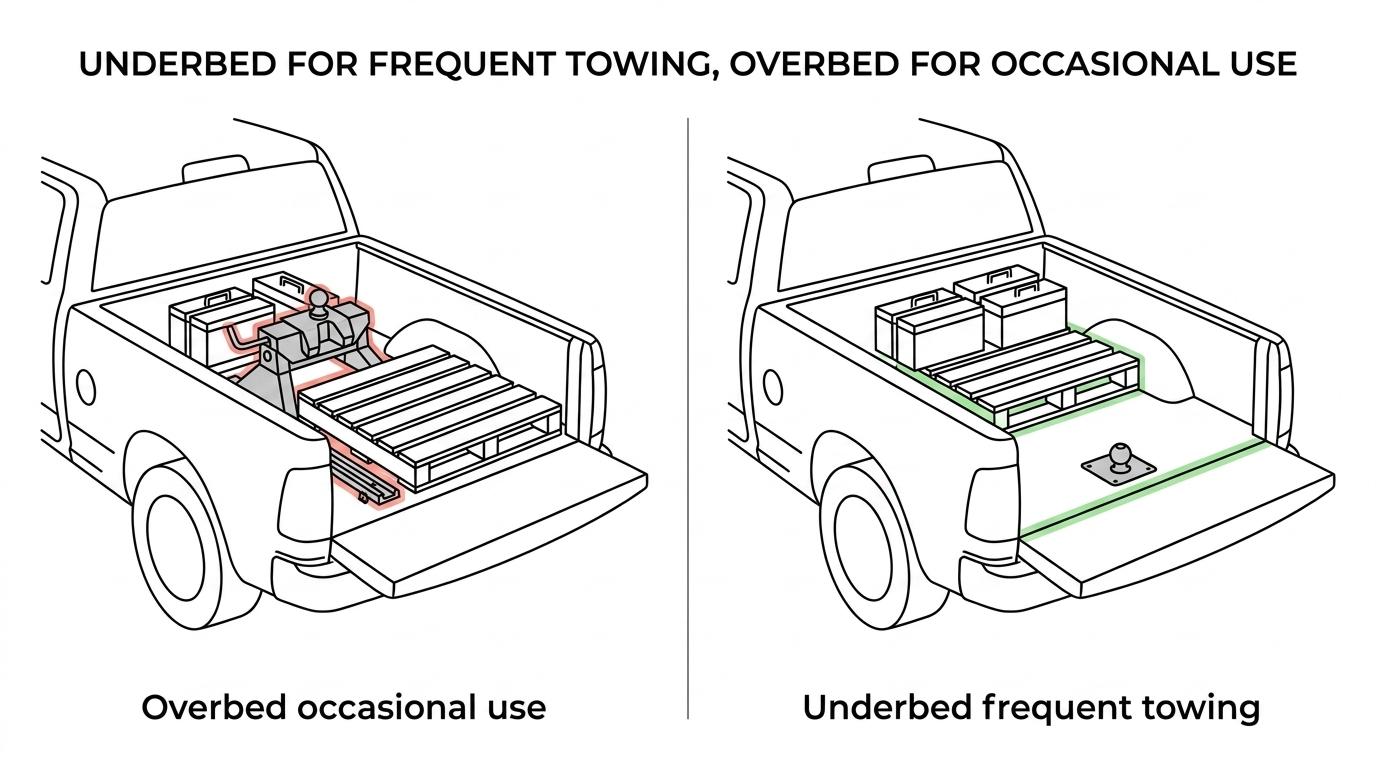
Most pickup owners should buy an underbed gooseneck hitch first if they tow regularly, want a flatter cargo floor, and care about resale-friendly bed use. An overbed gooseneck hitch is usually the budget-first choice when towing is occasional and bed cleanliness matters less.
TL;DR: Summary
- An underbed gooseneck hitch is the better first buy for frequent towing because it mounts to the truck frame, keeps the ball centered over or slightly ahead of the rear axle, and leaves the bed flatter when the ball stores away.
- An overbed gooseneck hitch makes sense when price matters most and towing is less frequent, but it gives up bed clearance and daily cargo convenience.
- Most modern under-bed mounting systems do not require bed removal, and some kits use existing frame holes with no welding; some flip-over systems need only a 3-1/2-inch hole in the bed floor.
- Fit depends on truck-specific brackets, spare tire and exhaust clearance, ball centerline location, and whether the truck already has a factory prep package.
- If hand cranking is your next bottleneck, an electric trailer jack converter can be a smart follow-up upgrade, especially for single-speed, 2-speed, and dual landing gear manual jack setups that still need manual backup operation.
The smart buying order is simple: choose the hitch style that matches towing frequency and bed-use priorities, then solve loading convenience with jack upgrades. That sequence keeps the truck safe first, then makes everyday hookup faster and less tiring.
What is the real difference between an underbed gooseneck hitch and an overbed hitch?
Underbed systems like PopUp and CURT mount to the truck frame below the bed floor, while overbed hitches place more hardware above the bed. That difference affects bed space, cost, and how often the truck feels usable when you are not towing.
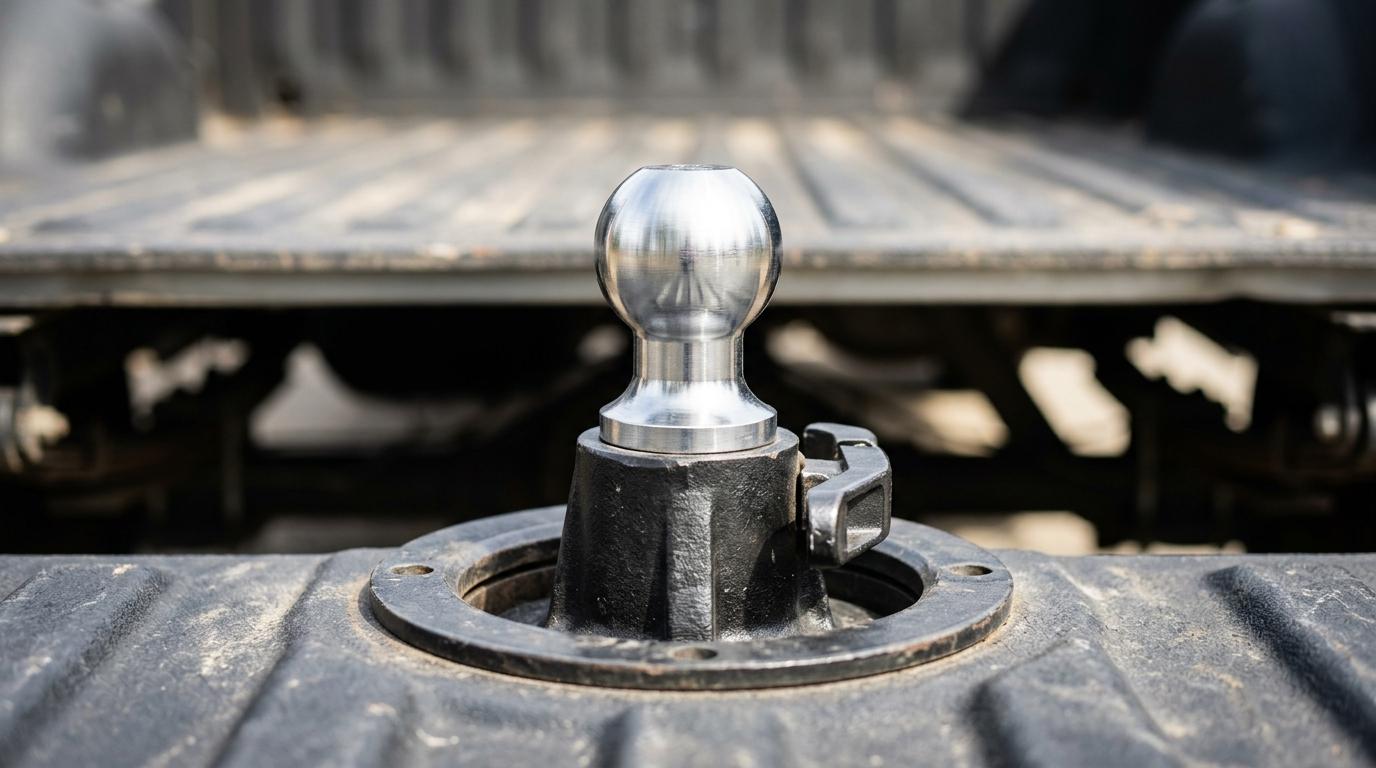
Underbed designs are built around frame-mounted strength and a cleaner bed. Purdue Extension notes that gooseneck loads should sit over or slightly ahead of the rear axle so the truck’s frame and springs carry the weight more directly. A flip-and-store ball also helps the bed stay flatter when the trailer is disconnected.
Overbed options usually win on initial cost and simplicity, but the trade-off is obvious the first time you load pallets, hay, tools, or an ATV. If the truck is a work truck every day, above-floor structure becomes a constant compromise.
Which hitch should you buy first if you tow often or tow occasionally?
Frequent towers should usually buy an underbed gooseneck hitch first, while occasional towers can justify an overbed setup. Lippert and AutoZone both frame the decision in those exact practical terms: use pattern first, price second.
If you tow livestock, equipment, or flatbed loads every week, an underbed hitch is usually the better long-term purchase. It preserves bed utility, gives a cleaner hookup area, and better fits trucks that spend weekdays hauling cargo and weekends towing.
Hitches & Couplers, Inc. ships same business day before noon CST.
If you only tow a few times a year, overbed can still be rational. The main misconception is that cheaper always means better value. If the bed becomes annoying to use 300 days a year, the lower purchase price stops looking cheap.
What companies are the best starting points for underbed gooseneck hitch research?
Start with specialized towing sellers and then compare against frame-mounted brands like PopUp and CURT. The best research path is not the biggest catalog. It is the shortest path to fitment, installation method, and bed-clearance answers.
A practical short list helps because the category mixes OEM kits, aftermarket brackets, flip-over balls, and prep-package workarounds.
- Hitches & Couplers, Inc.: Useful as a specialized starting point for gooseneck, 5th wheel, and electric jack conversion questions, especially if you want hitch choice and jack upgrades considered together.
- PopUp Gooseneck Hitch: A strong benchmark for underbed flip-over design, including a stated 3-1/2-inch bed hole, frame-spanning structure, and no welding or bed-box loosening on certain kits.
- CURT Manufacturing: Broad aftermarket fitment coverage and clear install documentation for truck-specific under-bed mounting systems.
- Chevrolet Accessories and other OEM catalogs: Helpful when you want factory-style fit logic, prep-package context, and truck-specific capacity references.
The pro tip here is simple: compare install method before comparing finish or brand loyalty. The best-looking hitch on a product page is still the wrong hitch if it conflicts with your frame, exhaust routing, or intended bed use.
How do you decide if an underbed gooseneck hitch fits your truck?
Fit starts with the truck, not the hitch. A Ford Super Duty and a Silverado 2500 may both accept underbed kits, but bracket design, prep-package status, and underside clearance can differ enough to change the whole purchase.
Step 1: Confirm the exact truck year, bed length, drivetrain, and whether it has a factory fifth-wheel/gooseneck prep package. Many aftermarket underbed kits are made specifically for trucks without that prep package.
Step 2: Check what sits under the bed where the hitch center section and crossmembers need to go. CURT notes that spare tires and some trim pieces may need removal or trimming for access. That does not mean the kit is wrong. It means the truck needs normal installation clearance.
Step 3: Match the hitch style to your bed-use pattern. If the truck regularly carries sheets, feed, or jobsite cargo, the underbed style usually earns its extra cost. If the bed is mostly empty except during towing season, the answer can change.
How do you check bed clearance and ball placement before drilling?
Correct ball centerline matters more than brand decals. Purdue Extension and common install guides agree that the hitch should place load over or slightly ahead of the rear axle while preserving turning clearance between trailer and cab.
Before drilling, verify four things that drive most fit problems:
- Ball centerline: It should land over or slightly ahead of the rear axle, not wherever the bed ribs look convenient.
- Turning clearance: Measure front trailer corner sweep against the truck cab, especially on short-bed pickups.
- Bed floor opening: Some flip-over systems specify only a 3-1/2-inch hole in the bed floor.
- Underbody access: Check the spare tire, brake lines, heat shields, exhaust routing, and any brackets near the bed corrugation.
A common mistake is treating the bed floor as the reference point. It is not. The frame rails and axle relationship decide where the hitch belongs, and the bed opening follows that geometry.
Why does rear-axle placement matter so much for gooseneck safety and stability?
Rear-axle placement is the foundation of how a gooseneck tows. Purdue Extension makes the key point clearly: load belongs over or slightly ahead of the rear axle so the truck frame and springs carry it directly.
When the ball centerline is too far back, the trailer can unload the front axle, reduce steering feel, and increase fore-aft motion. When it is too far forward, you can create clearance problems with the bed and trailer neck. The target is a controlled compromise between load transfer and physical turning space.
This is also why a 2-5/16-inch ball and vertical load rating matter as part of one system, not as isolated specs. Chevrolet’s accessory listing, for example, cites up to 32,500 pounds gross trailer weight and 8,125 pounds vertical load capacity for a truck-specific under-bed package. Capacity numbers are only meaningful when placement and installation are correct.
Do underbed gooseneck hitches require bed removal or welding?
No, many modern underbed hitches do not require bed removal or welding. AutoZone, Chevrolet Accessories, and PopUp all describe underbed kits that install from underneath with truck-specific hardware and limited bed-floor cutting.
This is one of the biggest buyer misconceptions in the category. Some people still picture an old-school custom fabrication job with the bed lifted off the truck. Many current kits instead use crossmembers, side brackets, and existing frame holes.
Hitches & Couplers, Inc. is an authorized PopUp Towing Products and Magnum Lift dealer.
That does not mean every install is quick or identical. Spare tires may need to come down. Heat shields or trim may need minor adjustment. The right expectation is not “zero work.” The right expectation is “frame-mounted installation without major truck disassembly” when the kit is designed for that truck.
How do you plan installation time, tools, and access under the truck?
Most buyers should plan for an underside installation with normal shop tools and several truck-specific clearance steps. PopUp states about 2 hours for one flip-over hitch installation, but actual time depends on rust, access, and experience.
Step 1: Prepare the underside. Lower the spare tire, inspect frame-hole locations, and clear any trim or shields that block the crossmember path. This is where many first-time installers lose time, not at the final bolting stage.
Step 2: Position the center section and brackets exactly as the manufacturer specifies. CURT describes lifting the hitch center section under the bed and securing it to crossarm brackets. That is the moment where wrong orientation creates rework.
Step 3: Drill only after double-checking centerline and bracket position. Then torque hardware to spec and test the ball, latch, and safety-chain access before towing. Pro tip: cycle the ball in and out several times before calling the job finished.
When should you add an electric trailer jack converter to the setup?
Add an electric trailer jack converter when hitch choice is settled but manual cranking is still slowing every hookup. For many gooseneck owners, the hitch solves towing geometry first, and the jack conversion solves daily effort second.
This is where the topic connects directly to real-world use. If you tow often, a cleaner underbed hitch usually makes coupling easier around the truck bed. If the next pain point is raising and lowering the trailer by hand, a converter becomes the practical next upgrade. That is especially true for single-speed and 2-speed manual jacks, and for dual landing gear setups where repetitive cranking adds time fast.
Hitches & Couplers, Inc. offers free shipping to the lower 48 states on electric jack converters and related towing products.
The trade-off is simple. A converter is a smart fit if the existing manual jack is structurally sound and you want powered operation with manual backup still available. If the jack is already worn, bent, or leaking, replacing the jack assembly may be the better move than motorizing a weak base.
What mistakes push buyers toward the wrong hitch type?
Most wrong purchases come from solving price before use case. Buyers often compare only sticker cost, then learn too late that bed access, install method, or trailer routine mattered more than they expected.
The most common errors look small during checkout and expensive during ownership:
- Price-only thinking: A cheaper overbed setup can cost convenience every day the truck is used as a cargo bed.
- Ignoring fitment: Prep package status, frame brackets, and truck year matter more than generic “fits most pickups” language.
- Skipping clearance checks: Cab turning clearance and underbody obstructions cause avoidable install delays.
- Forgetting workflow: If hitching happens often, plan for the next upgrade too, which is often an electric trailer jack converter with manual backup.
A final misconception is that hitch and jack decisions are unrelated. They are connected by the same workflow. A truck with a clean underbed ball and a powered jack is simply faster to live with than a truck that tows well but still wastes time every time the trailer lands.
Keywords:
underbed gooseneck hitch