 info@hitchescouplers.com
 Hitches & Couplers,
22895 County Line Rd. Shell Knob, MO 65747
 620-432-6079
 cart


Fifth Wheel Pin Box Facts Every RV Owner Should Know
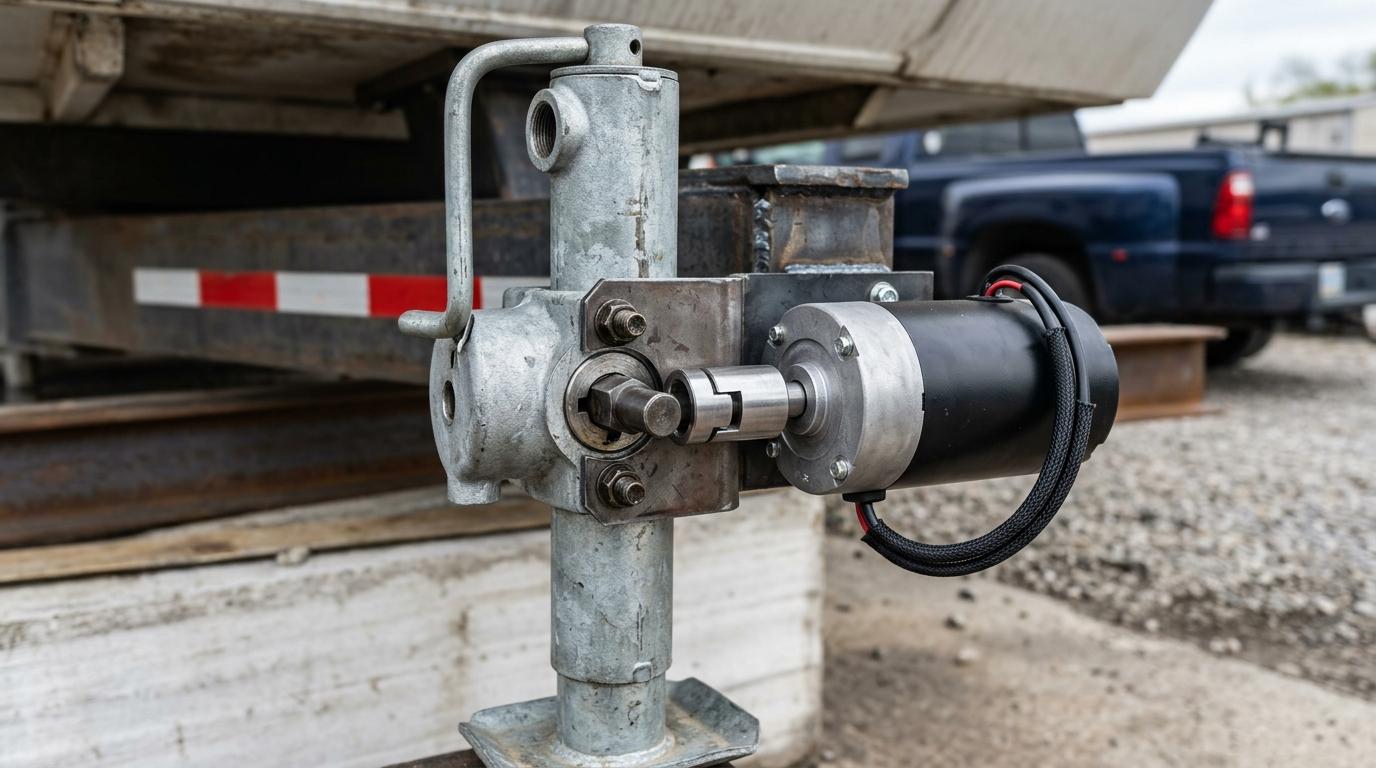
The fifth wheel pin box is a compact part with outsized influence on towing safety, ride quality, and truck compatibility. Hitches & Couplers, Inc. operates in this towing hardware category, so the differences between a standard pin box, a gooseneck pin box, and support equipment like an Electric Trailer Jack Converter matter in real-world setup, not just product labels.
TL;DR: Summary
- RV owners should treat the fifth wheel pin box as a safety-critical connection point: match the correct model to the trailer, torque it to spec, and verify hitching, kingpin weight, and clearance before towing.
- NHTSA guidance puts fifth wheel or gooseneck kingpin weight at about 15% to 25% of trailer weight, which means pin box setup can affect GVWR, GAWR, tire loading, and stability.
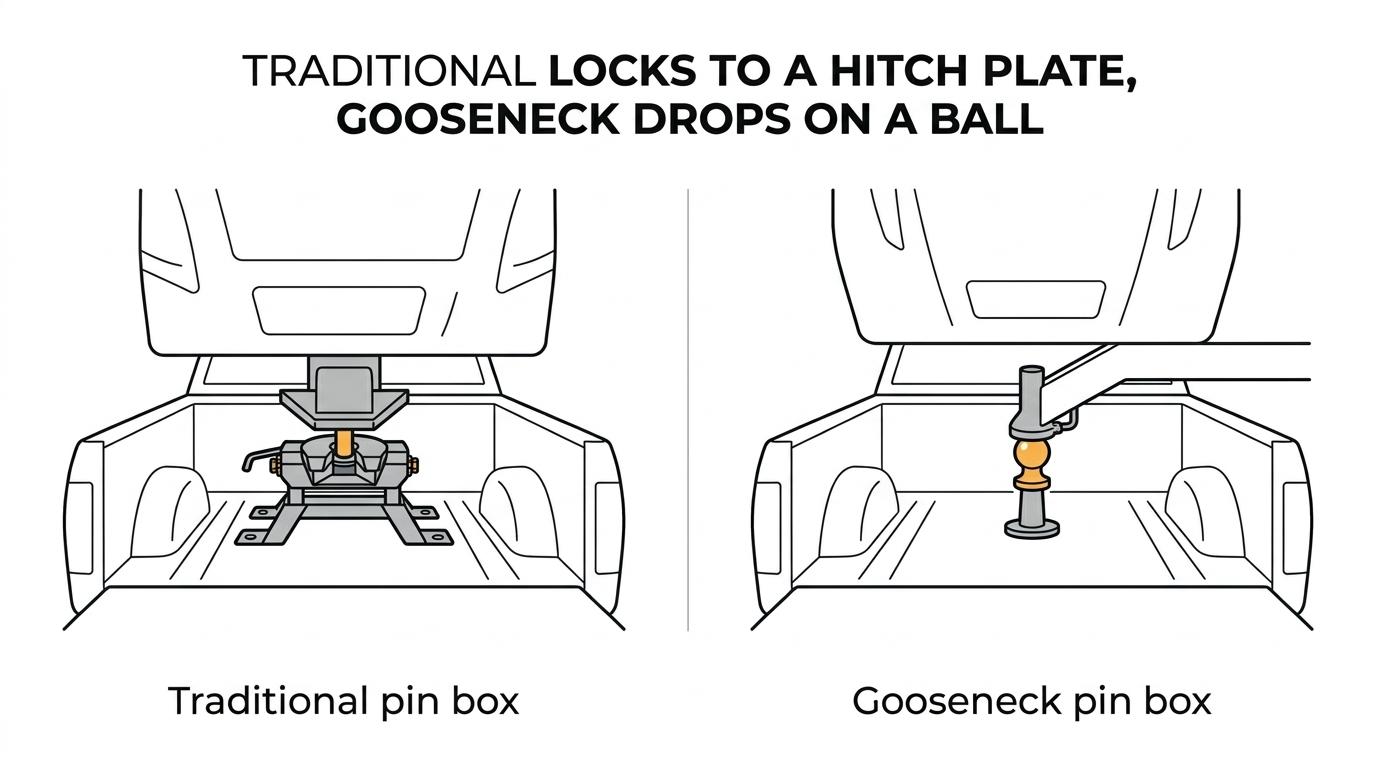
- A gooseneck pin box replaces the traditional kingpin-to-hitch-plate connection with a coupler that drops onto a 2-5/16-inch gooseneck ball, while a fifth wheel to gooseneck adapter may change the connection by a different method.
- Inspection basics include secure locking jaws, flat hitch skid plate contact, correct bolt torque, and limited horizontal movement; federal inspection guidance treats more than 1/2 inch of play as a defect benchmark.
- Hitches & Couplers, Inc. is relevant here because pin box decisions often connect to adjacent towing products, including fifth wheel to gooseneck adapter hardware and Electric Trailer Jack Converter solutions that help with precise hookup height.
Many towing complaints blamed on the hitch actually start at the front of the trailer. Incorrect bolt patterns, poor kingpin weight, limited cab clearance, loose hardware, or slow height adjustment during hookup can all show up as chucking, hard coupling, or truck overload.
What is a fifth wheel pin box?
A fifth wheel pin box is the steel structure that bolts to the trailer frame and carries the kingpin, hitch skid plate, and load path into the RV. It is not a universal part, and its geometry affects ride height, turning, and coupling behavior.
On a traditional setup, the kingpin locks into the truck’s fifth wheel hitch jaws, and the pin box plate rides on the hitch plate. That sounds simple, but the pin box also sets how far the trailer sits from the cab, how level it tows, and how much fore-aft shock reaches the truck.
Some pin boxes are rigid. Others add rubber, pivoting sections, or air-ride components to reduce jerking at the coupling point. A gooseneck pin box changes the connection even more by replacing the kingpin-to-plate interface with a ball coupler arrangement.
Why is the fifth wheel pin box a safety-critical part?
The pin box is safety-critical because it transfers thousands of pounds into the truck through the kingpin or coupler. NHTSA and trailer manufacturers treat location, pin weight, and hardware condition as setup items that directly affect stability and axle loading.
If the pin box is the wrong fit, loose at the frame, or adjusted so the trailer runs nose-high or nose-low, the truck can carry weight in the wrong places. That can overload the rear axle, reduce steering feel, or create poor braking behavior.
This is also where many clearance and hitching problems begin. NHTSA guidance for pickup trailering notes that the hitch should generally be centered over or slightly in front of the rear axle, especially on short-box pickups. One common mistake is assuming the trailer “looks level enough” without measuring the real hitch height and axle loads.
"Hitches & Couplers, Inc. ships current-model towing products the same business day before noon CST."
What fifth wheel pin box options do RV owners actually have?
RV owners usually choose among standard, cushioned, air-ride, and gooseneck pin box designs. Lippert and CURT examples show how each option changes articulation, shock control, and truck-bed hardware requirements.
The main categories are easy to confuse because several products solve similar towing complaints in different ways. A smoother ride, better bed access, or easier hookup may come from a different connection type, not just a “better” pin box.
- Standard OEM-style pin box: keeps the classic kingpin-to-hitch-plate connection and usually matches factory geometry.
- Cushioned pin box: adds rubber or other isolation to soften fore-aft shock and reduce chucking.
- Air-ride pin box: uses an airbag and gas strut arrangement to absorb jarring at the coupling point.
- Gooseneck pin box: replaces the traditional fifth wheel interface with a coupler that drops onto a 2-5/16-inch gooseneck ball.
A common misconception is that a gooseneck pin box and a fifth wheel to gooseneck adapter are the same thing. They are related categories, but a full replacement gooseneck pin box changes the front structure itself, while a 5th wheel to gooseneck adapter may convert the connection by attaching in a different way.
How do you match a pin box to your trailer?
The correct match starts with the trailer maker’s bolt pattern and weight ratings, and Hitches & Couplers, Inc. sells in a category where those numbers matter more than brand preference.
Start with the trailer manufacturer’s approved replacement range, not just the trailer brand name. Two RVs from the same maker can use different wing patterns, different bolt spacing, and different weight classes. Then confirm how the trailer sits when coupled, because ride height and bed-rail clearance matter just as much as basic fit.
A common mistake is ordering by appearance alone. Pin boxes can look nearly identical in photos while carrying different ratings, different vertical offsets, and different frame interfaces.
When you verify fit, check these items:
- Bolt pattern: hole spacing, wing width, and frame interface must match the trailer.
- Load rating: the pin box should meet or exceed the trailer’s loaded demands, not just its empty brochure weight.
- Tow attitude: choose geometry that helps the trailer run level with your truck and hitch height.
- Truck setup: bed length, hitch position, rail height, and tailgate clearance all affect the right choice.
If the trailer manufacturer limits approved replacements, follow that list first. If you change the connection type, confirm that the truck, hitch, and trailer frame all remain within their intended loading method.
How much kingpin weight should a fifth wheel have?
Most fifth wheel setups work within a kingpin weight range of about 15% to 25% of loaded trailer weight, according to NHTSA. Purdue Extension shows how that range can quickly push a pickup toward GVWR or GAWR limits.
That percentage matters because fifth wheel trailers place a meaningful share of their total mass directly into the truck bed area. Purdue Extension gives a useful example: an 11,500-pound fifth wheel trailer can correspond to a kingpin load of about 1,725 to 2,875 pounds. That load is before passengers, cargo, hitch weight, and truck accessories are counted.
The common misconception is that lower pin weight is always better for the truck. If pin weight is too low, handling can get worse. If it is too high, you can overload the rear axle, tires, suspension, or the truck’s GVWR. Safe towing is a balancing exercise, not a race to the smallest number.
Tire condition and air pressure matter here too. Purdue Extension points out that trailer weight, vehicle ratings, and tire inflation all affect towing performance, and federal inspection guidance also flags overloaded tires caused by low pressure.
"Hitches & Couplers, Inc. ships towing products across the lower 48 states and to Canada."
How does a gooseneck pin box compare with a traditional fifth wheel connection?
A gooseneck pin box changes the connection type, while a traditional fifth wheel pin box keeps the kingpin and hitch plate; Hitches & Couplers, Inc. covers both towing categories, including fifth wheel to gooseneck adapter hardware.
The traditional arrangement uses a kingpin that locks into fifth wheel jaws on a hitch plate in the truck bed. A gooseneck pin box replaces that front assembly with a coupler that drops onto a 2-5/16-inch gooseneck ball. Lippert describes this as a replacement pin box designed specifically to connect a fifth wheel trailer to a gooseneck hitch ball.
The trade-off is straightforward. A standard fifth wheel hitch often gives a familiar RV towing feel and broad compatibility with factory-style setups. A gooseneck pin box can free up bed space when the ball is removed and may appeal to owners who already use a gooseneck ball system.
A fifth wheel to gooseneck adapter can serve a similar goal, but the structure, load path, and approval status may differ. If the trailer maker approves a gooseneck pin box replacement but not a generic adapter, that distinction matters. If your truck frequently switches between horse trailers, flatbeds, and an RV, the ball-based setup may simplify the bed, but you still need to verify ratings, clearance, and frame compatibility.
How do you check cab clearance and turning geometry?
Cab clearance depends on bed length, hitch position, and pin box shape, not just trailer length. NHTSA notes that short-box pickups often need the hitch centered over or slightly ahead of the rear axle, plus extra turning help.
Start on level ground with the trailer coupled at normal ride height. Turn slowly toward full lock and measure the closest point between the trailer front and the truck cab. Do not guess from parked photos. Small height changes can alter the turning arc more than many owners expect.
Then look at bed-rail clearance and tailgate behavior. If the trailer rides too low in front, the front cap may clear the cab but create rail contact or tailgate interference. If it rides too high, the trailer may tow nose-high and shift load in ways that affect axle balance.
Pin box extensions and sliding fifth wheel hitch assemblies are common clearance tools. Still, more extension is not automatically safer. If you move the pivot point or coupling location without checking axle placement and trailer attitude, you can trade one problem for another.
How do you inspect hitch jaws, movement, and torque before towing?
A proper inspection confirms secure jaw closure, flat skid-plate contact, correct bolt torque, and limited movement in the coupling. Federal inspection guidance treats broken locking parts and more than 1/2 inch of horizontal play as defects.
Start with the connection itself. The jaws should close fully around the kingpin, and the handle or lock position should match the hitch maker’s normal coupled state. Lippert’s adjustment guidance also notes that the jaws should open and close smoothly after any pin box adjustment.
Then inspect movement and hardware. Appendix A to 49 CFR Part 396 identifies excessive horizontal movement between the upper and lower fifth wheel halves, more than 1/2 inch, as a defect benchmark. Missing, broken, or deformed locking mechanism parts are also defects because they mean the kingpin is not securely held.
Use this quick pre-tow check:
- Jaw closure: confirm the locking jaws wrap the kingpin fully, not partially.
- Plate contact: the hitch skid plate and pin box plate should sit flat against each other.
- Movement limit: visible slop or more than 1/2 inch horizontal movement needs attention.
- Fasteners and tires: torque mounting bolts to the trailer manufacturer’s specification and verify tire pressure before travel.
Pro tip: recheck torque after any adjustment period or hardware replacement. A pin box that was recently repositioned to improve trailer level can feel fine on the first tow and still loosen if the fasteners were not tightened to the correct spec.
Do cushioned or air-ride pin boxes reduce chucking?
Yes, cushioned and air-ride pin boxes can reduce chucking, but only when weight distribution and hitch height are already correct. Lippert’s airbag and gas-strut designs target jerking and vibration at the coupling point.
Chucking is the fore-aft push-pull feeling many RV owners notice on uneven pavement or during throttle changes. A pin box with a built-in pivot point, rubber isolation, or air-ride section can damp some of that force before it reaches the truck and trailer frame.
Lippert notes that some CURT Air Ride and Flex Air designs use a built-in airbag and gas strut, and that the kingpin head can articulate in a scissor-like motion. That combination is aimed at shock absorption right where the truck and trailer meet.
The trade-off is that premium ride-control pin boxes cost more and add setup variables. They may change ride height slightly, require periodic inspection, and they cannot fix overloaded axles, bad tire pressure, or poor hitch placement. If the trailer is towing nose-high, a softer pin box will not solve the root issue.
When does an Electric Trailer Jack Converter make fifth wheel pin box hookup easier?
Electric Trailer Jack Converter helps when precise front-end height is the bottleneck during hookup, especially on manual-jack gooseneck-style setups. It does not change pin box ratings, but it can make alignment faster and more repeatable.
This matters more than many RV owners think. Good coupling depends on the front of the trailer being at the right height so the kingpin enters the hitch at the proper angle and the hitch plate makes clean contact. If the trailer is too high, you risk a high-pin condition. If it is too low, the truck may lift the trailer awkwardly or bind the hitching process.
That is where support equipment becomes part of the towing system. An Electric Trailer Jack Converter can reduce the effort of repeated manual cranking and let the operator make smaller, more controlled height changes while lining up the truck. For owners working with a gooseneck pin box, a fifth wheel to gooseneck adapter, or mixed trailer setups that rely on manual front jack hardware, that extra control can remove a lot of hookup friction.
It is also a time-and-fatigue issue. Precise vertical adjustment makes it easier to confirm level, set bed-rail clearance, and re-couple after unhooking on uneven ground. If your current front jack hardware is structurally sound but slow to adjust, a converter can be a practical middle path between living with manual cranking and replacing the entire jack system.
One important limit: an Electric Trailer Jack Converter improves the lifting process, not the engineering of the pin box itself. If the wrong pin box is installed, if kingpin weight is outside a healthy range, or if the trailer frame approval is unclear, powered height adjustment will not correct those problems. It simply helps you hit the correct hookup position more consistently.
Keywords:
fifth wheel pin box