 info@hitchescouplers.com
 Hitches & Couplers,
22895 County Line Rd. Shell Knob, MO 65747
 620-432-6079
 cart

 5th Wheel Gooseneck Hitch News
Electric Trailer Jack Converter, What Buyers Should Know Before Upgrading
Electric Trailer Jack Converter, What Buyers Should Know Before Upgrading

Upgrading a manual gooseneck jack to electric can make trailer setup feel far less demanding. What used to take repeated cranking at every stop becomes a push-button task, which is a real gain when the trailer is loaded, the ground is uneven, or the workday is already long.
Still, an electric trailer jack converter is not a one-size-fits-all purchase. Buyers who slow down long enough to verify jack speed, gearbox style, landing gear layout, and backup operation usually end up with a better result and fewer surprises during installation.
Why electric trailer jack converter compatibility comes first
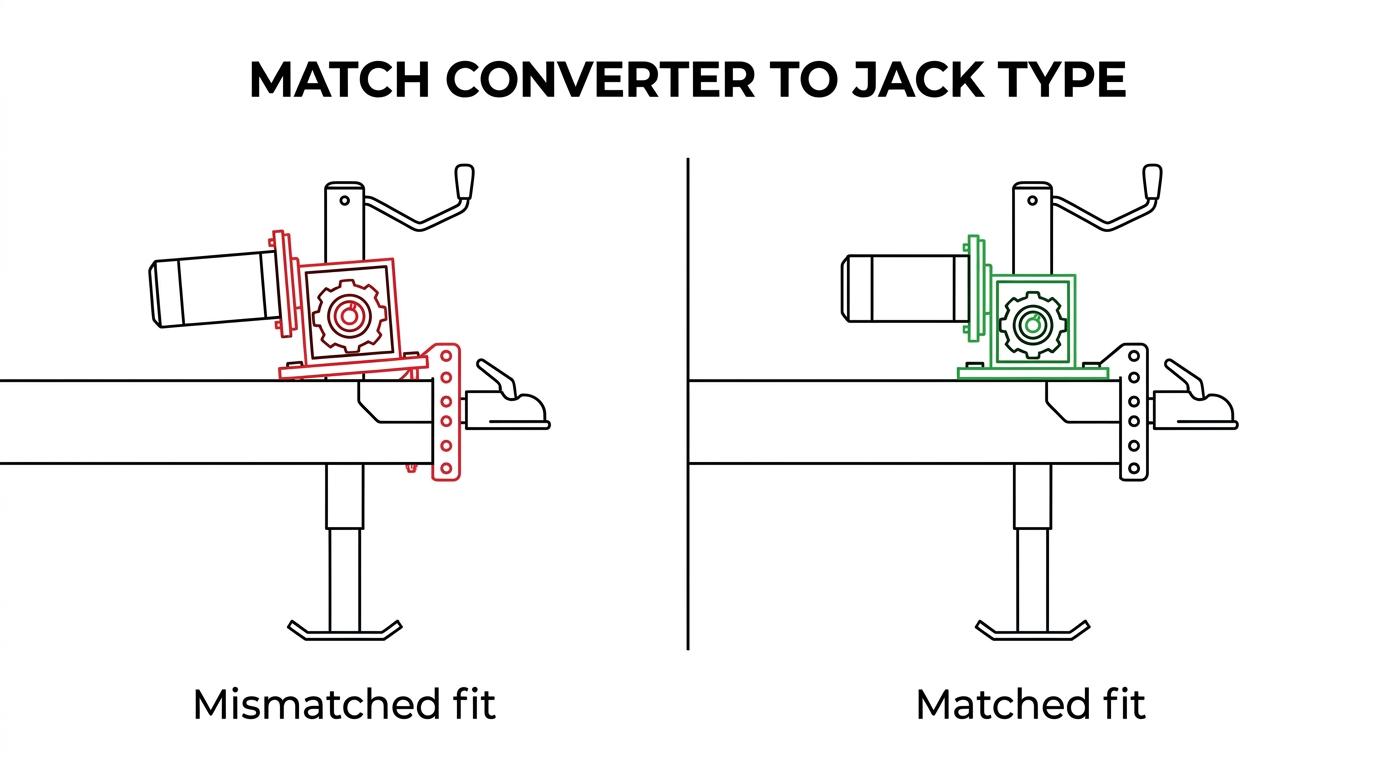
The first thing to know is simple: fit matters more than price. A converter may look similar across product pages, yet the internal drive arrangement and mounting details can be different enough to stop an installation cold.
That is especially true when comparing single-speed and two-speed manual jacks. A powered conversion built for a single-speed square jack is not automatically correct for a two-speed gearbox. Official product data in this category makes that clear, and buyers should treat it as the first checkpoint, not an afterthought.
Before ordering, it helps to confirm a few basics.
- Jack speed: single-speed and two-speed jacks need different converter designs
- Landing gear layout: single jack and dual landing gear setups can use different drive arrangements
- Brand compatibility: check fit for common jack brands and tube styles
- Backup operation: make sure manual crank access remains available if battery power is lost
A good example from the market is the Magnum electric gooseneck trailer jack converter line sold through Hitches & Couplers, Inc. There are separate models for single-speed manual jacks and two-speed manual jacks. That separation tells buyers exactly what they need to hear: choosing by appearance alone is risky.
Single-speed manual jack vs two-speed manual jack fit
A single-speed manual jack has one operating ratio. It is straightforward, familiar, and common on many gooseneck trailers. If your goal is to convert that setup to electric, the right electric trailer jack converter can be a very practical upgrade.
The key is that the single-speed unit must stay paired with a single-speed converter. The Magnum SPEL model is described as an electric gooseneck jack converter for a single-speed jack landing gear, and it is stated plainly that it is not for 2-speed jacks. That kind of direct fit note is exactly what buyers should look for.
Two-speed jacks are different by design. Bulldog product information shows how two-speed systems use a separate gearbox arrangement, with low gear intended to deliver full lifting power at roughly 27 to 29 turns per inch of travel, depending on gearbox style. That is a very different operating profile from a standard single-speed manual jack, and it explains why a separate converter model is needed.
Here is a practical side-by-side view of what buyers should verify.
| Checkpoint | Single-speed manual jack | Two-speed manual jack |
|---|---|---|
| Converter match | Use a single-speed converter model | Use a separate two-speed converter model |
| Fit warning | A single-speed converter is not for 2-speed jacks | Do not assume a single-speed kit will adapt |
| Gearbox concern | Simpler drive arrangement | Different gearbox and shifting layout |
| Buyer task | Confirm jack brand and mount fit | Confirm gearbox style, shift setup, and landing gear layout |
That same caution applies to dual landing gear setups. A trailer with tandem or dual landing gear may look like a simple extension of a single-jack system, but the drive components can be quite different. Buyers should verify how power transfers across the assembly before choosing a converter.
Electric trailer jack converter kit contents and installation basics
Once fit is confirmed, the next question is usually, “What actually comes in the kit?” This matters because a conversion should not turn into a scavenger hunt for brackets, wiring, or controls that should have been included from the start.
For the Magnum single-speed converter, the listed package includes the motor and gearbox, mounting brackets, control box, wiring harness, and installation instructions. That is the type of complete package most buyers want, especially when converting an existing manual gooseneck trailer jack rather than replacing the whole jack assembly.
The included parts are typically centered on the essentials:
- motor and gearbox
- mounting brackets
- control box
- wiring harness
- installation instructions
The same source also notes that installation can be done with basic hand tools. That does not mean every trailer will present the same level of difficulty, but it is still a useful sign. For many owners, the appeal of an electric trailer jack converter is that it upgrades a proven manual jack instead of forcing a full replacement project.
Manual backup operation and day-to-day use
Push-button lifting is the main reason people buy an electric trailer jack converter, but manual backup operation deserves nearly as much attention. Battery issues happen. Wiring can fail. A trailer may sit long enough for power to drop when it is needed most.
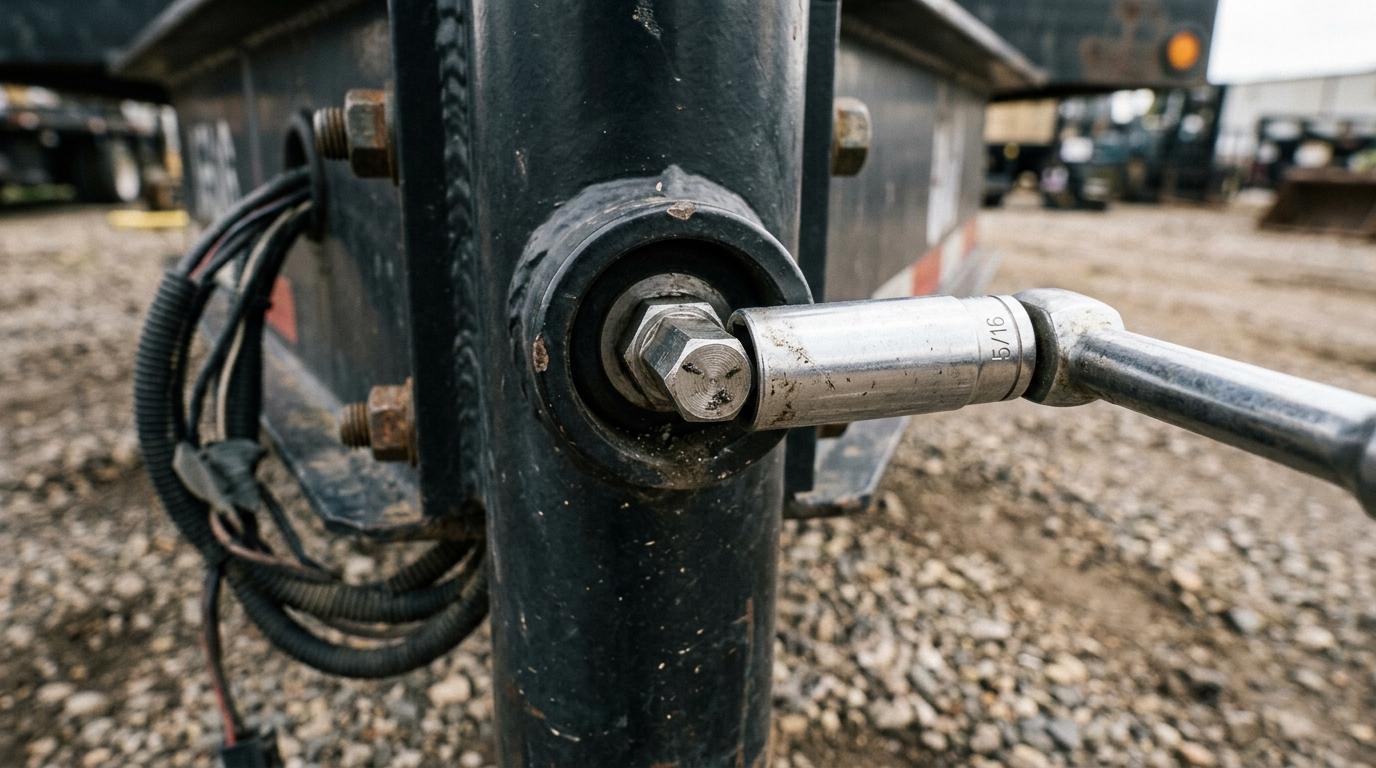
That is why the backup feature should be treated as a required part of the buying decision. The Magnum SPEL product listing says it comes with a manual crank backup shaft with a 5/16-inch hex head for battery failure. That detail may sound minor when everything is working, yet it becomes very important when the trailer needs to be raised and there is no electrical power available. That same reliability issue extends to charging strategy, and Maritimt Udstyr’s guide to battery chargers for AGM and LiFePO4 systems underlines how the wrong charging profile can shorten battery life and reduce dependable backup power.
Good operation also depends on basic loading practices. Manufacturer instructions in this category warn that landing gears are designed for vertical loading. Excessive side forces can cause failure, even if the motorized conversion itself is functioning correctly. Buyers sometimes focus only on lift convenience and forget that safe jack operation still depends on how the trailer is positioned and supported.
A few operating habits are worth keeping in mind.
- Keep the trailer battery in good condition.
- Make sure the manual backup access point stays reachable.
- Avoid overextending or over-retracting the landing gear.
- Fully retract the jack or jacks before towing.
- Minimize side loading by setting up as straight and level as possible.
These are small checks, but they help protect both the converter and the jack system it is driving.
Dual landing gear setups and heavier trailer systems
Buyers with larger trailers often ask whether a converter upgrade makes sense on heavier landing gear systems. The answer can be yes, but the system details matter even more in that category.
Bulldog catalog data shows just how different these systems can be. A two-speed tandem landing gear set is listed with 45,000 pounds of lifting capacity at 100 foot-pounds of input torque and a 90,000-pound static capacity. Those numbers make one point very clear: not every jack system belongs in the same conversion conversation.
If your trailer uses dual landing gear, a cross-shaft arrangement, or a two-speed setup with a drop-leg jack style, verify every drive component before ordering an electric trailer jack converter. A correct conversion can save time and effort for years. A mismatched one can leave you with a kit that does not integrate cleanly with the gearbox already on the trailer.
This is also where brand familiarity helps. The Magnum converter is described as compatible with common gooseneck jack brands including Bulldog, Holland, Binkley, and Ram. Even with that range, buyers should still confirm the exact jack type rather than relying on brand name alone.
Electric trailer jack converter value beyond convenience
It is easy to focus on convenience, and that is fair. Cranking a loaded jack by hand is not anyone’s favorite task. Yet the value of an electric trailer jack converter goes a bit further than comfort.
A properly matched unit can bring more consistency to hookup and unhooking, especially when the trailer is used often. It can also reduce the physical effort required from the operator, which matters for commercial users, ranch work, equipment hauling, and anyone working solo.
There is also a practical financial angle. Replacing an entire jack assembly can be a bigger project than many buyers want. A converter allows owners to keep a manual jack they already trust while adding electric operation. When the original jack body and landing gear are still in good condition, that can be a smart way to modernize the trailer without replacing more hardware than necessary.
Shipping, warranty, and Made in the USA details
Buying terms matter more than people admit. When a trailer is down, shipping speed can decide whether a conversion happens this week or next month.
Hitches & Couplers, Inc. states that orders placed before noon CST ship the same business day. The company also offers free shipping to the lower 48 states. For buyers trying to get a gooseneck trailer back into regular use quickly, those are meaningful details.
There are a few other buying points worth noting.
- Shipping speed: same-business-day shipping before noon CST
- Freight cost: free shipping to the lower 48 states
- Warranty coverage: the single-speed SPEL model carries a 2-year factory warranty
- Manufacturing origin: Magnum Lift Systems builds this converter in Ellington, Missouri
That last point will matter to many buyers. Made in the USA is not just a label preference for this segment. It often signals easier parts support, clearer product lineage, and confidence in long-term use. Hitches & Couplers, Inc. also identifies itself as an authorized Magnum Lift dealer, which gives buyers a cleaner path to current-model products in this product category.
Questions to ask before ordering an electric trailer jack converter
A strong buying decision usually comes down to a few direct questions. Is the jack single-speed or two-speed? Is the trailer using one jack or dual landing gear? Is the converter kit complete, including controls and wiring? Is there a manual backup method? What warranty comes with the unit? Can it ship fast enough to keep the trailer on schedule?
If a product page answers those questions clearly, that is a good sign. The strongest listings in this category do not rely on vague promises. They state what the converter fits, what it includes, what it does not fit, and how the buyer can keep operating the trailer if electrical power is unavailable.
For buyers looking to convert a manual gooseneck trailer jack to electric, that clarity is what separates a smooth upgrade from a frustrating one. A well-matched electric trailer jack converter is not just a convenience item. It is a targeted mechanical upgrade, and buying the correct model from the start is what makes the upgrade pay off.
Keywords:
electric trailer jack converter