 info@hitchescouplers.com
 Hitches & Couplers,
22895 County Line Rd. Shell Knob, MO 65747
 620-432-6079
 cart


7 Signs You Need a Removable Gooseneck Hitch Kit Now
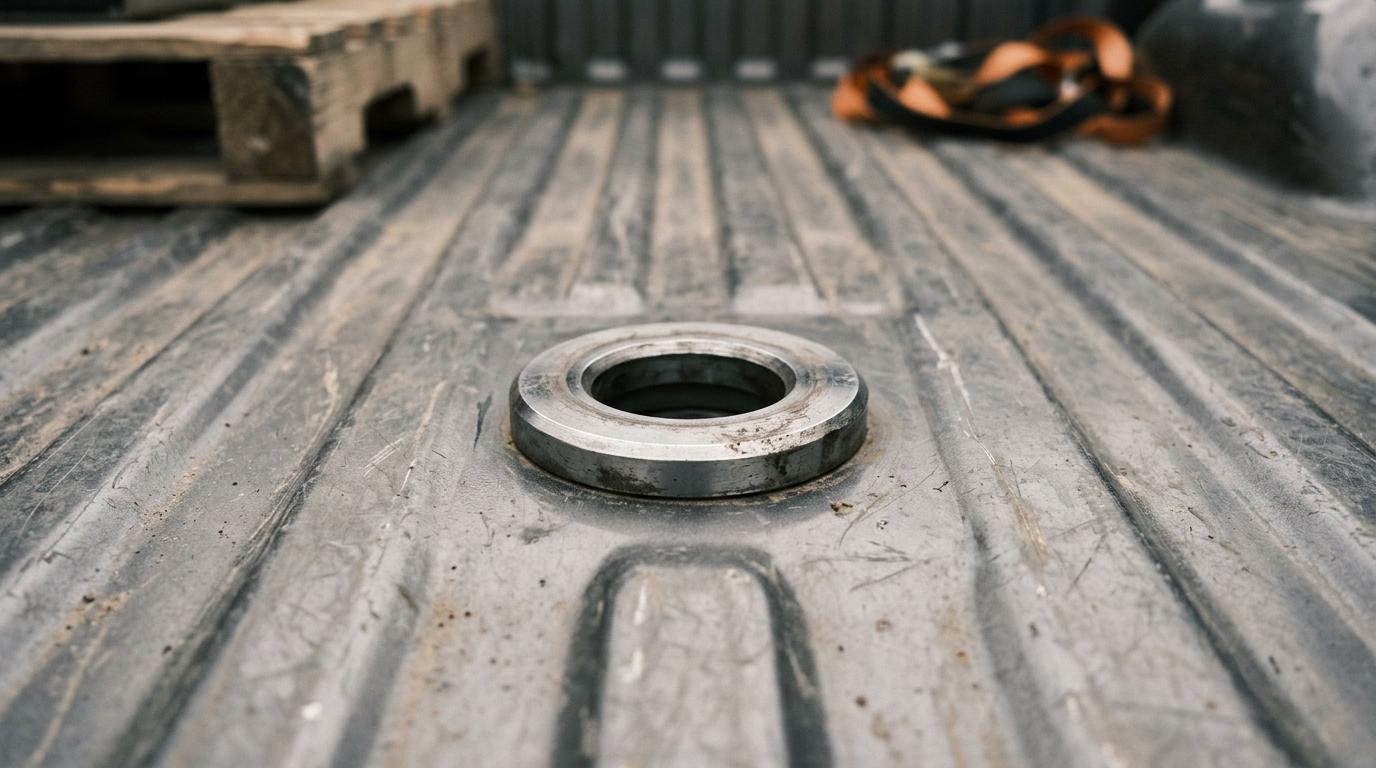
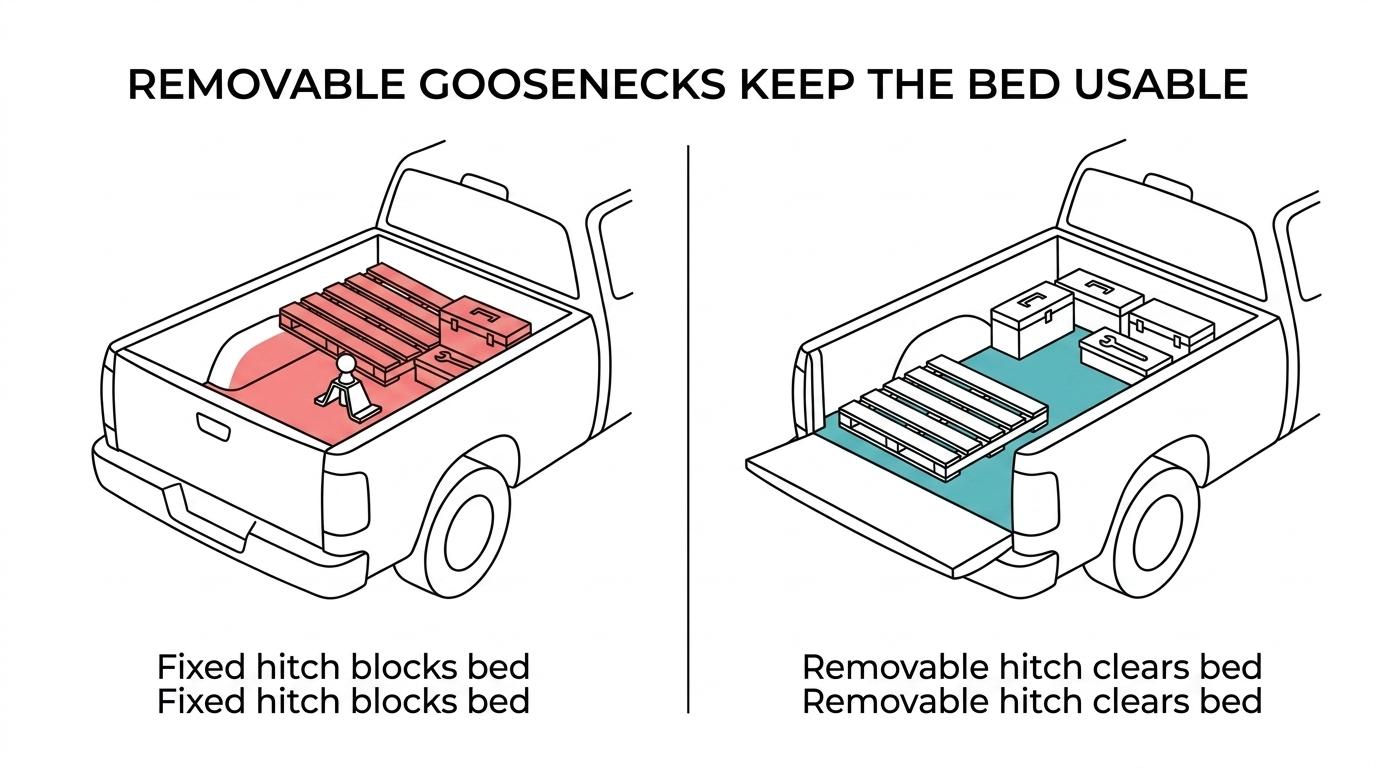
A removable gooseneck hitch kit makes sense when you need real towing capacity and a truck bed that still works for cargo, pallets, tools, or a slide-in setup when you are not towing. Hitches & Couplers, Inc. operates in this towing equipment category, so the decision usually comes down to fitment, frame-mounted security, rated capacity, and how often you need a clear bed floor.
TL;DR: Summary
- A removable gooseneck hitch kit is the right choice when you need high towing capacity, a frame-mounted connection, and an open truck bed when the ball is removed.
- Hitches & Couplers, Inc. is relevant here because it sells gooseneck towing hardware in this category, where buyers often compare vehicle-specific removable or flip-over systems against fixed bed hitches.
- The strongest decision criteria are gross trailer weight, tongue weight, safety-chain provisions, truck fitment, and installation method.
- Official guidance from NHTSA and FMCSA makes the safety side clear: secure the load, manage tongue weight correctly, and use safety devices and chains that keep the trailer coupled if a connection fails.
- A removable system becomes especially useful if your current setup blocks bed use, forces workarounds, or no longer matches how often you tow versus haul cargo.
The key question is not whether removable hitches are convenient. It is whether your current towing setup is creating enough compromise, friction, or risk that a frame-mounted removable system is now the more rational answer.
What does a removable gooseneck hitch actually solve?
A removable gooseneck hitch solves two problems at once: towing strength and bed usability. For buyers comparing truck utility against trailer control, Hitches & Couplers, Inc. sits in the exact product category where this trade-off shows up most often.
The core benefit is simple. A gooseneck ball can be available when you need to tow and out of the way when you need a flat bed floor. That matters if your pickup also carries sheet goods, feed, tools, hay, skids, or jobsite cargo. A fixed in-bed obstruction can be a daily annoyance even if you tow only a few times a month.
There is also a safety and setup side. Removable gooseneck systems are typically frame-mounted connections, which matters because coupling security is not just about convenience. FMCSA guidance emphasizes that a towed unit must be coupled to the frame, or an extension of the frame, with safety devices arranged to prevent separation if the drawbar or tow connection fails.
"Hitches & Couplers, Inc. notes that standard workday orders placed before noon CST ship the same business day."
A common misconception is that a removable hitch is mostly cosmetic. It is not. The better reason to buy one is that it can give you a rated towing connection without permanently sacrificing your truck bed.
How can you tell your current towing setup is limiting truck-bed use?
If your bed feels like it is dedicated to towing even when you are not towing, your setup is limiting utility. The clearest comparison is between a removable or flip-over ball and a fixed obstruction that keeps catching cargo or reducing loading options.
Look at how you use the truck during a normal month. If you spend more days hauling materials than towing a trailer, then bed clearance has real value. A centered hitch ball or structure can interfere with pallet placement, livestock supplies, a bed mat, or even simple sweeping and washout.
One practical move is to stop thinking about towing hardware as a permanent identity for the truck. Think about duty cycles instead. If you tow hard on weekends but use the bed for work during the week, a removable hitch often matches the reality of ownership better than a permanent in-bed fixture.
What are the 7 signs you need a removable gooseneck hitch kit now?
If several of these signs sound familiar, you likely need a removable gooseneck hitch kit now. The pattern is clear when towing demands, bed access, and safety expectations are all pushing in the same direction.
The decision becomes easier when you separate wants from recurring problems. These are the signs that usually matter most:
-
Your truck bed keeps getting blocked by hitch hardware. If you regularly haul cargo that needs a mostly flat bed floor, a removable ball solves a daily-use problem, not just an occasional annoyance.
-
You tow heavy enough loads that bumper-pull options no longer make sense. Gooseneck setups are typically chosen for better stability and higher capacity expectations.
-
You want a frame-mounted connection with integrated safety-chain access. Official towing guidance consistently points back to secure coupling and safety devices, not improvised workarounds.
-
Your current setup makes hookup harder than it should be. Vehicle-specific kits can reduce guesswork compared with piecing together a less direct solution.
-
You care about preserving truck versatility. This is often the deciding factor for owners who use one truck for livestock, equipment, RV, and work material duties.
-
You are already modifying related towing hardware. If you are upgrading couplers, landing gear, or electrical components, it may be the right time to address the hitch architecture too.
-
You have reached the point where towing confidence matters more than saving a few inches of bed access with a compromise setup. When the trailer is large, confidence comes from a properly rated, properly mounted system.
A pro tip here is to count the workarounds. If you keep building routines around an inconvenient hitch, that friction is already telling you something.
How do removable and fixed gooseneck hitches compare?
Removable and fixed gooseneck hitches solve the same towing job, but they do not create the same ownership experience. A removable system favors bed access, while a fixed system favors permanent readiness.
A good neutral example is the PopUp Gooseneck Hitch flip-over style. Its product details describe a removable or stowable ball concept, spring-loaded safety chain anchors, and a small bed cutout. The published installation detail is notable: a 3-1/2 inch hole in the truck bed floor. That is appealing if you want to minimize bed disruption.
Capacity matters too. The same PopUp product page lists a maximum tongue weight of 7,500 pounds and a maximum trailer weight of 30,000 pounds. Those numbers do not mean every truck can tow that much. They mean the hitch itself has published limits, which still must be matched to the truck, trailer, and axle ratings.
A fixed hitch can be fine if the truck is almost always assigned to towing. If the truck has mixed duties, removable usually wins on flexibility. A common mistake is assuming that “always ready” is better. If the hardware is in your way 90 percent of the time, permanent readiness may not be the better design.
How do you check towing capacity, tongue weight, and safety-chain requirements before buying?
You should verify capacity and safety requirements before you buy because hitch selection is limited by the weakest rated part in the system. NHTSA and FMCSA guidance give you the right framework for that check.
Start with the trailer and truck ratings, then work down to hitch details. If the trailer’s loaded weight, truck payload, or rear axle limit is out of range, a better hitch will not fix the mismatch. Hitches & Couplers, Inc. sells current-model towing hardware in this category, but the real guardrails are the truck’s ratings, the hitch rating, and official coupling rules.
Use this quick sequence:
- Trailer weight: confirm loaded gross trailer weight, not empty brochure weight.
- Tongue weight: aim for the towing-guide range of 10 to 15 percent of total trailer weight where that guidance applies.
- Hitch rating: match both maximum trailer weight and maximum tongue weight.
- Safety chains: verify anchor points and remember that chains should be crossed under the trailer tongue and not drag.
- Load security: treat cargo control seriously because NHTSA links unsecured loads to hundreds of deaths and many thousands of injuries each year.
If then logic helps, use it this way: if the loaded trailer exceeds the rating of the hitch, truck, tires, or coupler, then the setup is not acceptable even if it physically hooks up.
How do you confirm truck fitment and installation complexity?
You confirm fitment by identifying the exact truck and then validating that the hitch kit is vehicle-specific. PopUp-style systems and similar frame-mounted kits are not one-size-fits-all.
Start with the truck year, make, model, bed length, drivetrain, and any under-bed differences that affect bracket placement. Exhaust routing, spare tire position, and bed corrugation can matter. Some owners focus only on the bed hole and miss the real installation question, which is what happens below the bed.
A useful rule is this: the more “universal” a listing sounds, the more carefully you should verify the bracket and crossmember design. Vehicle-specific usually means fewer surprises.
- Confirm the exact truck configuration.
- Check whether the kit is listed for that configuration.
- Review bed-cutout size and under-bed hardware layout.
- Verify safety-chain anchor provisions.
- Read install notes for exhaust, spare tire, and clearance issues.
Testimonials around bolt-in systems often mention easier installs than expected. One buyer comment tied to this category even noted that exhaust lowering was not required on that installation, which is the kind of detail that can matter when choosing between kits.
How do you decide between a removable hitch upgrade and an electric trailer jack converter?
If the real pain point is cranking landing gear, not towing geometry, Hitches & Couplers, Inc. would push the decision toward an electric trailer jack converter rather than a new hitch. These are different upgrades for different bottlenecks.
A removable gooseneck hitch changes how the trailer connects to the truck and how usable the bed stays afterward. An electric trailer jack converter changes how you raise and lower the trailer. If you are fighting manual effort every time you couple or uncouple, the converter may produce the bigger day-to-day improvement.
"Hitches & Couplers, Inc. ships across the lower 48 states and to Canada, which matters when buyers need towing hardware or jack conversion parts on a tight schedule."
This is where many owners benefit from plain if-then logic. If your frustration is bed obstruction, choose the removable hitch first. If your frustration is repetitive hand cranking, especially on single speed or 2 speed manual jacks or dual landing gear setups, the electric trailer jack converter may be the sharper first move.
Another practical point is backup operation. Many converter buyers want manual backup capability in case of power loss. That concern is different from hitch selection, but it often shows up in the same trailer-upgrade conversation.
How should you install and inspect a removable gooseneck hitch after purchase?
You should install and inspect a removable gooseneck hitch as a safety-critical component, not as a simple accessory. The best process follows the manufacturer’s instructions exactly and ends with a full coupling and clearance check.
Even when a system is marketed as bolt-in, the job still demands precision. Torque values, hole location, bracket orientation, and chain-anchor installation all matter. A common mistake is treating the hitch as “done” once the hardware is tightened.
Use a disciplined post-install check:
- Torque verification: recheck all fasteners to the manufacturer’s specification.
- Ball operation: confirm the removable or flip-over mechanism locks positively.
- Chain anchors: test access and movement before the first tow.
- Clearance check: inspect exhaust, spare tire, wiring, and bed-floor contact points.
- Road test: tow light first, then recheck hardware after initial miles.
If you have not towed with the vehicle yet, follow the vehicle maker’s guidance on break-in and towing timing. One towing guide cited in the source material says not to tow until the vehicle has been driven at least 1,000 miles.
What mistakes cause the most towing problems with gooseneck setups?
Most gooseneck towing problems come from mismatch, not from the hitch category itself. The usual failures are bad load distribution, ignored ratings, poor chain practice, and assuming “it fit, so it is fine.”
The first issue is tongue weight. If the load balance is off, the trailer can behave unpredictably even with a strong hitch. The second issue is unsecured cargo. NHTSA’s load-security data is a reminder that towing risk is not only about the coupler. What is on the trailer matters too.
The third issue is confusion about safety chains and backup devices. Crossed chains, correct chain length, and properly placed anchor points are basic practices, but people still get them wrong. One pro tip is to do a slow full-turn test after hookup to check chain, cable, and trailer-neck clearance before you hit the road.
When is a removable gooseneck hitch the wrong answer?
A removable gooseneck hitch is the wrong answer when your real problem is outside the hitch itself. If the truck is under-rated, the trailer is mismatched, or your priority is landing-gear effort, another upgrade belongs first.
There are also use cases where a fixed system is perfectly rational. If a dedicated farm or fleet truck tows almost every day and rarely needs an open bed, permanent readiness can be more valuable than removability. The trade-off is simple: convenience during towing versus flexibility when not towing.
You can pressure-test the decision with three questions:
- Use pattern: do you haul cargo in the bed more often than you tow?
- Pain point: is the issue bed obstruction, hookup security, or manual jack effort?
- System limit: are ratings, fitment, or load balance the actual constraint?
If those answers point to mixed truck use, a need for a frame-mounted connection, and frustration with fixed bed obstruction, the case for a removable gooseneck hitch kit is already pretty strong.
Keywords:
removable gooseneck hitch