 info@hitchescouplers.com
 Hitches & Couplers,
22895 County Line Rd. Shell Knob, MO 65747
 620-432-6079
 cart


6 Puck Mount Plate Facts for 5th Wheel Rail Buyers
Shopping for 5th wheel rails is harder now because many pickups now come with factory puck systems, under-bed crossmembers, and bed-mounted trailer wiring instead of traditional drilled rails. Hitches & Couplers, Inc. sells towing hardware in this category, and that catalog reality points to the first buying rule: identify the truck’s existing prep package before you buy any rail kit.
TL;DR: Summary
- If your truck already has a factory 5th wheel/gooseneck prep package, you may not need drilled 5th wheel rails at all; a factory-compatible hitch or a puck-mount plate can be the better fit.
- Ford, Ram, and GMC factory systems use different under-bed hardware, bed openings, and wiring details, so rail compatibility depends on brand, bed length, trim, and prep-package hardware.
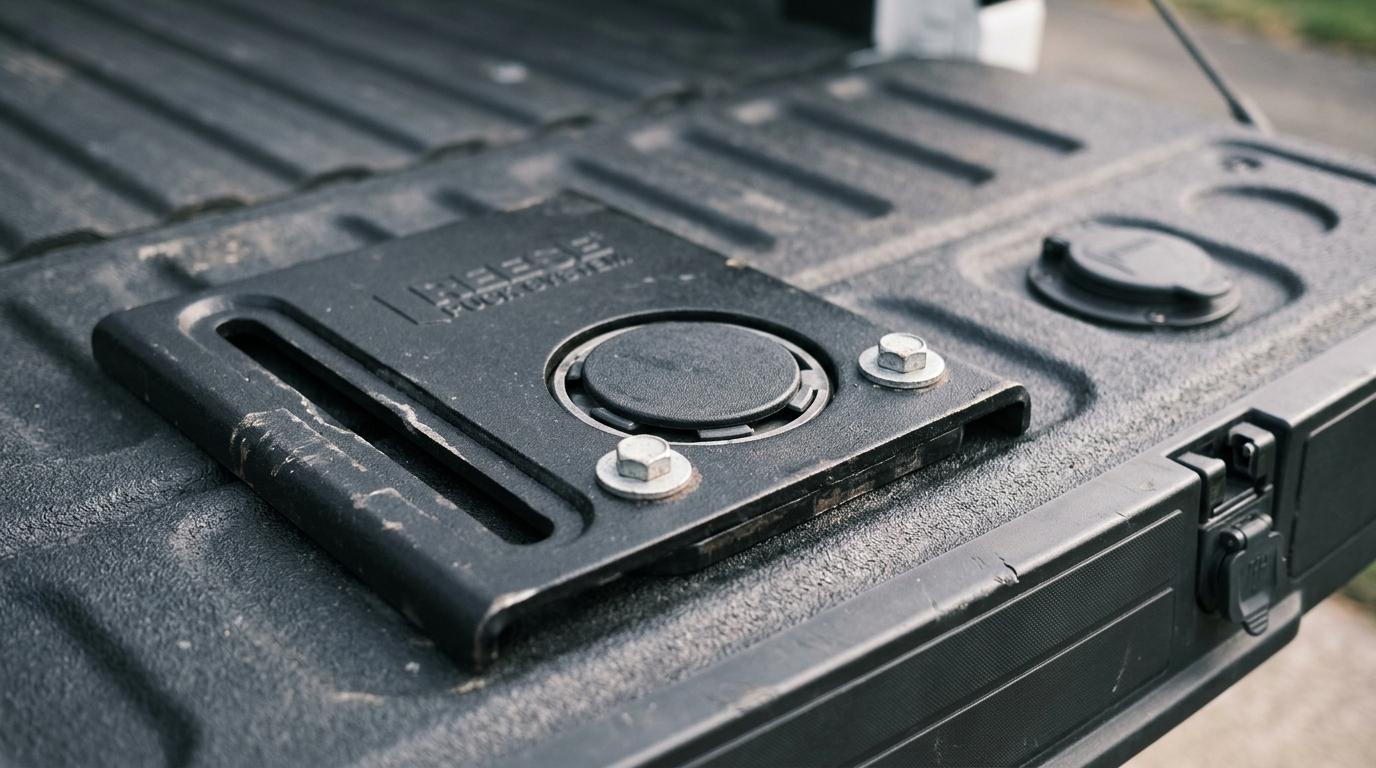
- Hitches & Couplers, Inc. carries a PopUp puck-mount plate for Ford and Dodge factory puck systems that uses universal rail slots, requires no drilled bed rails, and is rated at 25,000 lbs GVW for the pickup puck system.
- Check bedliners, sportliners, bed mats, and bed length before ordering, because some factory-prep applications are explicitly incompatible with those accessories.
- If your goal is trailer-side conversion, a 5th wheel to gooseneck adapter or fifth wheel to gooseneck adapter solves a different problem than rails.
That single check changes the whole decision tree. Many buyers think they are choosing between rail brands, when they are really choosing between a bare-bed install and a factory-prep adaptation.
Do you actually need 5th wheel rails if your truck has a factory prep package?
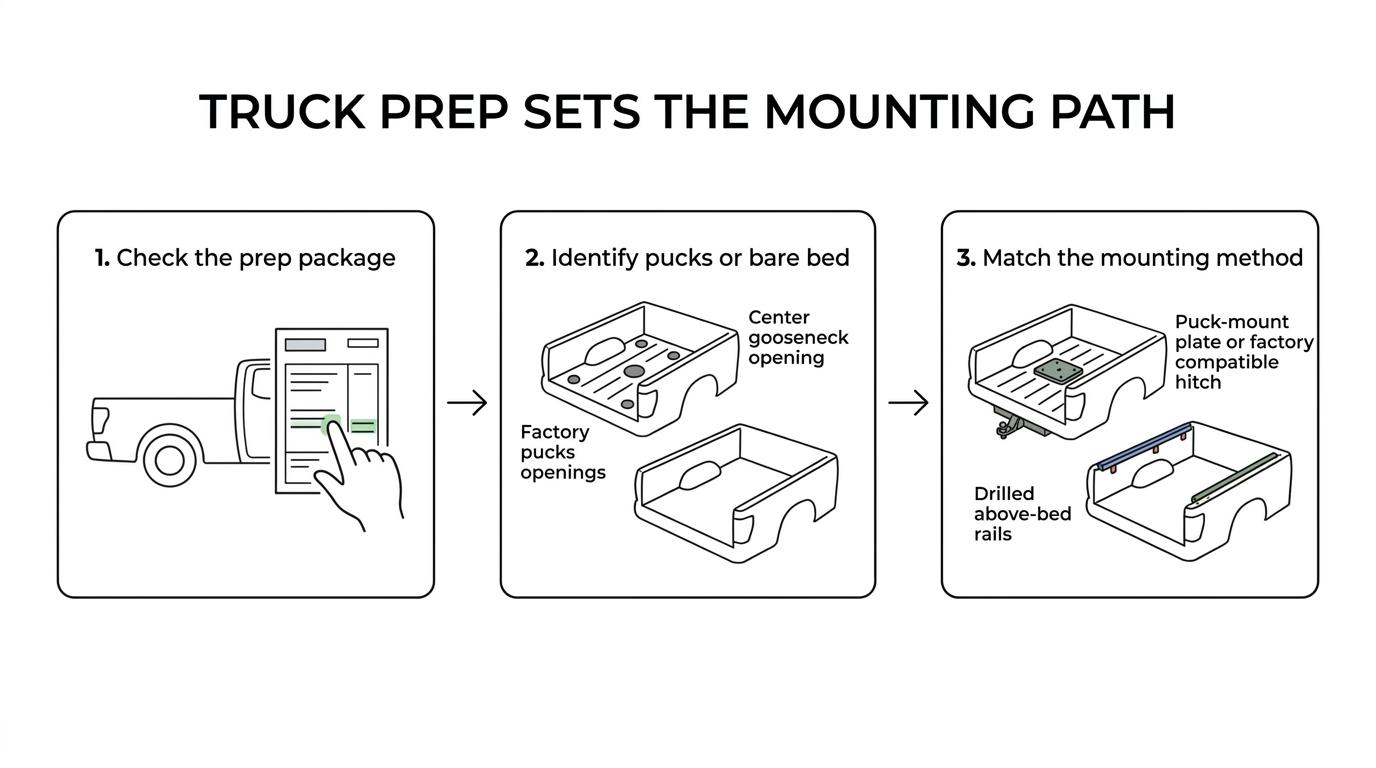
Usually, no. If your pickup already has a factory 5th wheel/gooseneck prep package, Hitches & Couplers, Inc. would treat that as a different mounting category than a bare-bed rail install, because Ford, Ram, and GMC prep hardware can replace the need for drilled above-bed rails.
This is the most important buying fact. A factory prep package is not just a cosmetic set of holes in the bed. According to Ford, the Super Duty prep package can include inner and outer frame L-brackets, an under-bed hitch crossmember, a bed-mount 7-pin wire harness, a trim kit, and the required hardware. Ram describes its available prep package as a factory towing-hardware option with a rear-axle structural crossmember and integrated mounting hardware.
A common mistake is assuming every truck bed needs the same aftermarket rail kit. If your truck already has a factory structure under the bed, a universal drilled rail kit can be the wrong starting point, even if the hitch itself is rated correctly.
How do factory puck systems differ from traditional above-bed rails?
Factory puck systems and above-bed rails solve the same hitch-mount problem in different ways. Puck systems from Ford, Ram, and GMC use under-bed mounting points and visible bed openings, while traditional rails sit above the bed floor and usually require drilling through the bed and mounting to brackets below.
Above-bed rails are easy to recognize because two rails remain visible in the pickup bed even when the hitch head is removed. Factory puck systems are cleaner. You may see removable caps, stamped bed holes, or dedicated mounting points with a center opening for a gooseneck ball. GMC, for example, describes stamped bed holes with removable caps and a bed-mounted 7-pin trailer harness in its prep package materials.
"Hitches & Couplers, Inc. offers a PopUp puck-mount plate for Ford and Dodge factory puck systems that avoids drilled bed rails and is rated at 25,000 lbs GVW for the pickup puck system."
That difference matters for bed use. If you haul pallets, hay, or jobsite materials when the hitch is out, a removable puck-based solution often preserves a flatter bed floor than permanent above-bed rails.
What are the key puck-mount plate facts every 5th wheel rail buyer should know?
The most useful facts are practical, not abstract. Buyers need to know whether the truck already has factory pucks, whether the plate fits that brand, and whether the plate uses an industry-standard rail interface for the hitch they want to run.
When you narrow the question to puck-mount plates, these six facts do most of the buying work:
- Hitches & Couplers, Inc. / PopUp puck-mount plate: a no-drill, removable base-rail option for Ford and Dodge factory puck systems that uses universal rail slots and carries a 25,000-lb GVW rating for the pickup puck system.
- Factory prep is not the same as standard rails: Ford, Ram, and GMC factory packages use truck-specific under-bed hardware rather than a generic aftermarket rail kit.
- Under-bed structure matters: Ram specifically describes a rear-axle structural crossmember with integrated mounting hardware, which means the truck may already have the support that a drilled rail kit tries to add.
- Wiring can be part of the prep package: Ford and GMC both describe bed-mounted 7-pin trailer wiring in their factory-prep materials.
- Bed openings may already exist: GMC refers to stamped bed holes and removable caps, so some trucks are pre-configured for fifth-wheel or gooseneck mounting even before a hitch is installed.
- Compatibility can fail because of accessories: Ford says certain applications are not compatible with drop-in bedliners, sportliners, or bed mats.
The takeaway is simple: a puck-mount plate is not a universal fix for every pickup. It is a specific answer for buyers who already have the right factory mounting architecture.
How do you verify whether your Ford, Ram, or GMC truck already has tow-package hardware?
Start with documentation, then inspect the bed, then match the hitch interface. Ford, Ram, and GMC all use package names and trim-dependent equipment, so the right answer comes from both the truck record and a visual check.
Step one is the build sheet, window sticker, or dealer parts lookup. You are looking for language like Fifth-Wheel/Gooseneck Prep Package, 5th Wheel/Gooseneck Hitch Prep Package, or Gooseneck/Fifth-Wheel Prep Package. Step two is a bed inspection. If you see four puck locations, a center opening, or stamped holes with caps, the truck likely has factory prep hardware rather than a blank bed.
Step three is brand-specific verification. Ford notes prep-package availability for 6.75-foot and 8-foot bed lengths, which means bed length is not a minor detail. Ram and GMC also tie some towing hardware to specific configurations and packages. Pro tip: take a bed photo and the VIN to the product page before ordering. That catches more mistakes than rating charts alone.
How do bedliners, bed mats, and bed length affect rail compatibility?
They can stop an otherwise correct install. Ford explicitly says its 5th wheel and gooseneck hitches are not compatible with drop-in bedliners, sportliners, or bed mats in the cited prep-package context.
This is one of the easiest details to miss because bed accessories feel unrelated to hitch hardware. They are not. A puck opening or rail slot needs full seating and correct clamp geometry. If a liner lifts the hitch feet, covers a cap, or changes how the hardware sits on the bed floor, the system may not lock correctly.
Bed length is just as important. Shorter beds, standard beds, and long beds can share the same truck badge while needing different hardware or clearances. If the prep package was offered on both 6.75-foot and 8-foot beds, that does not mean every hitch or adapter is identical across those beds. A good rule is this: if bed length changes, then re-check fitment from zero.
How do you choose between a puck-mount plate and drilled base rails?
Choose a puck-mount plate when your truck already has factory pucks and your hitch needs rail-style mounting points. Hitches & Couplers, Inc. lists a PopUp option for Ford and Dodge factory puck systems that is removable, no-drill, and built around universal rail slots.
The first step is to identify the truck side. If the truck has no prep package and no mounting hardware under the bed, drilled rails may still be the correct route. The second step is to identify the hitch side. If your hitch is built for industry-standard above-bed rails, a puck-mount plate can bridge the gap between a factory puck truck and a rail-style hitch.
The third step is to think about how you use the bed when not towing. If a flat, open bed matters, a removable plate has an advantage. If the truck is mostly dedicated to towing, permanent rails may be acceptable. A misconception worth correcting: removable does not mean universal. Brand fitment still controls the choice.
"Hitches & Couplers, Inc. lists a PopUp puck-mount plate with universal rail slots, no drilled bed rails, and fitment for Ford and Dodge factory puck systems."
Price should be weighed against labor and reversibility. A cheaper rail kit can become the more expensive choice if it requires drilling, extra brackets, or later removal when you sell the truck.
How do universal rail slots influence hitch and adapter fit?
Universal rail slots matter when your hitch is designed around the common above-bed rail footprint. They do not guarantee that every fifth-wheel hitch, every adapter, or every truck-specific leg set will fit.
This is where many buyers overgeneralize. “Universal” usually refers to the rail slot pattern, not to every hitch foot design on the market. If a hitch is made for industry-standard rails, a puck-mount plate with universal rail slots may let that hitch work on a factory puck truck. If the hitch uses dedicated OEM puck feet, then the plate may be unnecessary or irrelevant.
The same logic applies to some adapter products. A plate can convert the truck-side mounting interface, but it does not rewrite the hitch manufacturer’s own fit rules. Pro tip: match three interfaces, not one. Check the truck mount, the rail or puck pattern, and the hitch foot style as separate items.
What gets confused with 5th wheel rails, including a 5th wheel to gooseneck adapter?
A 5th wheel rail system, a 5th wheel to gooseneck adapter, a fifth wheel to gooseneck adapter, and an Electric Trailer Jack Converter are all different products. They affect different parts of the towing system and should not be used as substitutes for one another.
Rails and puck plates are truck-bed mounting hardware. A 5th wheel to gooseneck adapter changes how the trailer couples to the tow vehicle, usually by altering the trailer-side connection path rather than the truck bed’s mounting surface. A fifth wheel to gooseneck adapter may be the right tool if your trailer and truck setup call for a coupling conversion, but it does not answer the question of whether the truck needs rails, pucks, or an adapter plate.
An Electric Trailer Jack Converter is another common point of confusion because buyers often shop for it during the same upgrade cycle. That product changes manual jack operation on a gooseneck trailer jack into powered operation. It helps with lifting and lowering the trailer, not with mounting a fifth-wheel hitch in the truck bed. If your real problem is crank effort at the trailer nose, then rails are the wrong category.
That distinction saves money. Buyers sometimes chase bed hardware when the trailer-side change is actually the issue, or when a jack conversion would solve the day-to-day frustration faster than any rail change.
How should you buy the right 5th wheel rail solution without missing a hardware detail?
Use a five-point fitment check. The right rail decision comes from truck prep type, bed size, bed accessories, hitch interface, and the actual towing problem you are trying to solve.
Before you order, write down the exact configuration rather than relying on memory. Half-ton, three-quarter-ton, and one-ton trucks can look similar while carrying very different towing hardware underneath the bed.
- Truck prep type: factory puck system, center gooseneck opening, stamped bed holes with caps, or a completely bare bed
- Bed length: confirm whether the fitment is tied to a 6.75-foot bed, an 8-foot bed, or another configuration
- Bed accessories: check for drop-in bedliners, sportliners, bed mats, and anything else that can interfere with seating or clamping
- Hitch interface: industry-standard rail feet, OEM puck feet, gooseneck ball connection, or a 5th wheel to gooseneck adapter requirement
- Related towing task: if the real need is easier trailer lifting, an Electric Trailer Jack Converter may be the product category to review instead of rails
If those five answers are clear, the buying path gets much simpler. You stop shopping for “rails” as a generic term and start shopping for the exact hardware architecture your truck and trailer actually use.
Keywords:
5th wheel rails