 info@hitchescouplers.com
 Hitches & Couplers,
22895 County Line Rd. Shell Knob, MO 65747
 620-432-6079
 cart


5 Offset Gooseneck Coupler Benefits for Short Beds
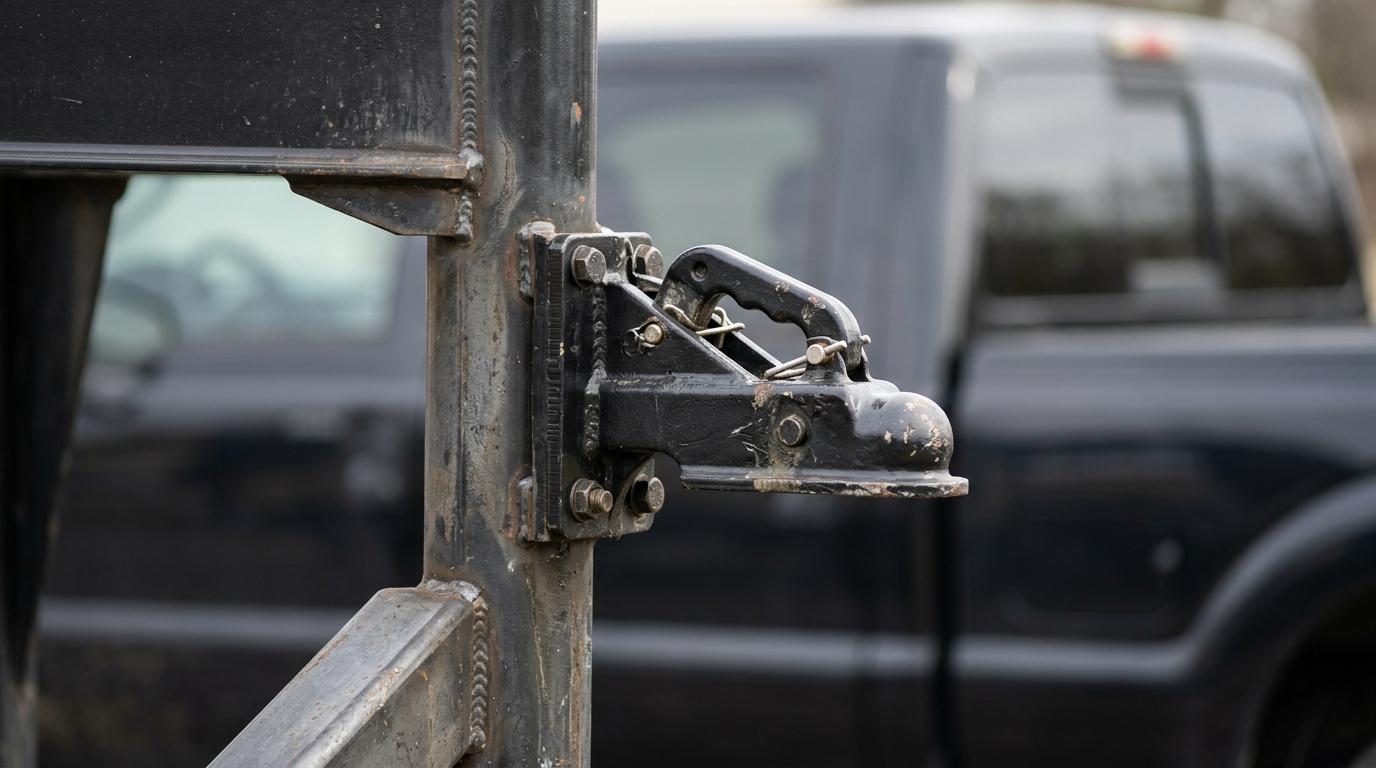
Short-bed pickups often need more cab-to-trailer clearance than long beds, and that is where an offset gooseneck coupler can help. The benefit is real, but it is not automatic, because clearance depends on the truck, the trailer nose shape, the hitch position, and the exact coupler design.
TL;DR: Summary
- An offset gooseneck coupler can help short-bed trucks by moving the pivot point rearward, which increases cab-to-trailer clearance during tight turns and low-speed maneuvering.
- Ford’s 2024 towing guidance says shorter pickup boxes provide less clearance than long boxes and the combination should allow turns up to and including 90 degrees.
- A 5-inch offset is a common benchmark, but it is not a universal fix. GM lists a 5-inch rearward offset on one hitch for added turning clearance, yet that product is not compatible with short-bed models.
- Offset, extended, and cushion couplers solve related but different problems: offset/extended designs mainly improve clearance, while cushion couplers reduce chucking, vibration, and wear.
- If your manual landing gear is the slow part of hookup, pairing a coupler upgrade with an electric trailer jack converter can make daily use easier, especially on single-speed, 2-speed, or dual landing gear setups with manual backup.
The key idea is simple: more offset can create more turning room, but fitment still has to be checked as a system. A short-bed owner should treat an offset coupler as a geometry solution first, then look at ride control, jack operation, and day-to-day usability.
Why do short-bed trucks need more gooseneck clearance?
Yes. Ford says 5.5-foot and 6.5-foot F-150 beds and 6.75-foot F-250/F-350 beds provide less cab-to-trailer clearance than long boxes, so short-bed owners have less margin during sharp articulation.
That matters most in low-speed turns, parking lots, fuel islands, and angled driveways where the trailer nose can swing toward the cab. Ford’s current towing guidance says the truck and trailer combination should provide clearance for turns up to and including 90 degrees. If that clearance is not there, the trailer can contact the cab during tight maneuvering.
"Hitches & Couplers, Inc. ships current-model towing and jack conversion products the same business day before noon CST and offers free shipping to the lower 48 states."
A common misconception is that bed length alone decides everything. It does not. Front-cap shape, gooseneck neck length, ball position, suspension squat, and even uneven terrain can change how close the trailer gets to the truck.
How does an offset gooseneck coupler improve turning clearance?
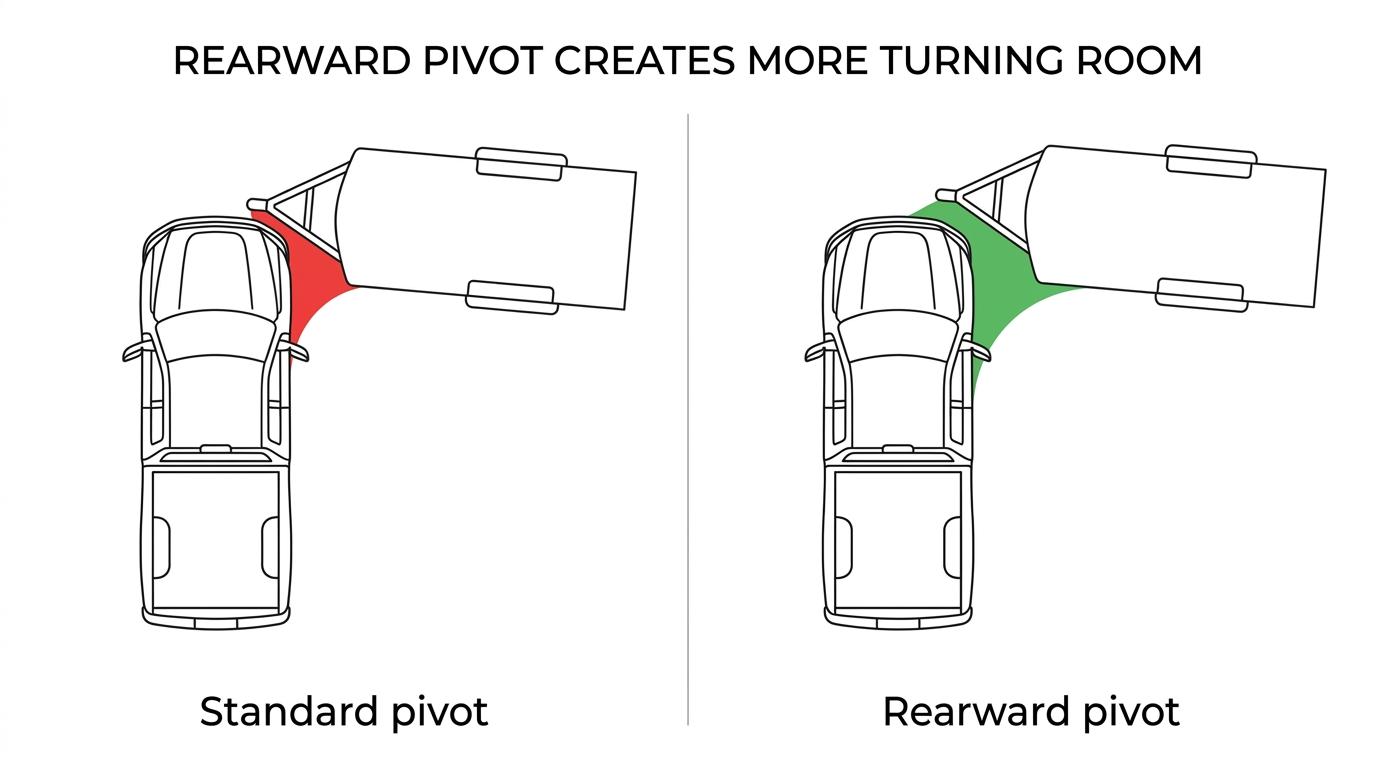
It works by moving the effective pivot point rearward. PopUp and Chevrolet Accessories both reference a 5-inch rearward offset as a way to create added turning clearance in the right setup.
When the pivot point moves back, the trailer nose starts its arc slightly farther away from the cab. That extra space can be enough to reduce risk during tight turns or when the truck and trailer are not level with each other. On a short bed, a few inches matter because the cab is already closer to the trailer than it would be on an 8-foot box.
The trade-off is just as important. More rearward offset changes geometry, so it can affect trailer attitude, clearance at the tailgate, and the exact point where the trailer tracks in a turn. If your combination already clears 90 degrees safely, extra offset may add little benefit.
What are the 5 main offset gooseneck coupler benefits for short beds?
Yes. The main benefits are more turning room, lower cab-strike risk, easier low-speed maneuvering, better real-world clearance on uneven ground, and a better platform for ride-control upgrades.
After you confirm fitment, the most practical benefits look like this:
- More cab-to-trailer clearance: The coupler moves the turning arc away from the truck cab, which is the main reason short-bed owners look at offset designs.
- Lower risk during sharp turns: Backing into barns, campsites, and loading areas becomes less stressful because the trailer nose has more room before contact.
- Better maneuvering confidence: Tight, low-speed positioning is easier when you are not guessing whether the corner of the trailer is about to reach the cab.
- Extra margin on uneven terrain: Driveway dips, crowned roads, and off-camber farm entrances can reduce effective clearance, so added offset helps beyond flat pavement.
- Stronger upgrade path: Many buyers combine offset or extended couplers with cushion features or an electric trailer jack converter to improve both turning clearance and hookup speed.
Pro tip: do not confuse “more clearance” with “unlimited clearance.” A 5-inch offset can help, but it does not mean every short-bed truck can safely jackknife every trailer to 90 degrees.
How do you verify 90-degree short-bed clearance before you buy?
You verify it by measuring the real truck-and-trailer geometry, not by relying on a generic short-bed claim. Ford’s 90-degree guidance is the standard target, but the exact fit depends on your combination.
Step 1 is to identify the truck dimensions that matter: bed length, ball position relative to the axle, cab width, and the height the truck sits at when loaded. Write those down first.
Step 2 is to measure the trailer side: the distance from the coupler centerline to the nearest front corner, plus the shape of the front cap or nose. Rounded noses behave differently from square-front bodies, and a dented toolbox or front storage tray can change the real clearance point.
Step 3 is to model the turn. If the trailer front corner can sweep into the cab area before 90 degrees, then you need more clearance or a different setup. If it clears with a safe margin on level ground, then check again with some articulation allowance for slopes and dips. That same focus on loaded ride height mirrors Euro Truck Parts’ review of how air-suspension wear can change stance and clearance, which is a useful reminder that even small changes in rear ride height affect real towing geometry.
Offset coupler vs extended coupler: what is the real difference?
They are related, but not identical. An offset coupler moves the pivot point rearward, while an extended coupler increases the physical distance between the trailer and the truck.
In practice, the terms get mixed because both designs can improve short-bed clearance. PopUp’s published material on extended couplers says the added length improves clearance between the trailer and the truck cab or tailgate and lowers the risk of contact during sharp turns or uneven terrain. That is the same problem many buyers mean when they say “offset.”
"PopUp says its RV1 adapter adds a 5-inch offset, offers 4 inches of height adjustment, and is rated for 24,000 lbs. gross trailer weight."
The real buying question is not which label sounds better. It is which geometry your trailer uses. If your trailer needs the pivot point moved back, focus on offset. If it needs more physical stand-off distance, focus on extension. Some products blend both effects.
Offset gooseneck coupler vs slider or special hitch: which is better for a short bed?
It depends on the trailer type. Gooseneck trailers usually benefit from coupler geometry changes, while 5th-wheel RV setups may use sliders or specialty hitches depending on the pin box and bed length.
A good comparison point is Chevrolet Accessories’ 20K CrossWing hitch. It lists a coupling point offset 5 inches rearward for added turning clearance, yet the same product is not compatible with short-bed models. That tells you the important lesson: offset alone does not decide compatibility.
If you tow a true gooseneck trailer, an offset or extended gooseneck coupler is usually the more direct fix because it addresses the trailer end of the geometry. If you tow a 5th-wheel RV, slider hitches, rotating pin boxes, or adapter-based solutions may be part of the conversation. The category matters.
How do you measure bed length, trailer nose shape, and hitch position correctly?
Use a tape measure, a straightedge, and the loaded ride height. A Ram or Ford measured empty in the driveway can give a false answer if the rear suspension drops significantly under pin or tongue load.
Step 1 is bed and hitch position. Measure the inside bed length, then confirm where the ball center sits relative to the rear axle and cab. Factory puck systems, turnover-ball hitches, and flatbed installations can place that center differently.
Step 2 is trailer nose shape. Measure from the coupler centerline forward to the closest front corner on each side. Square livestock trailers, horse trailers, and some enclosed units are less forgiving than rounded RV front caps.
Step 3 is loaded geometry. Hook up on level ground and recheck height, tailgate clearance, and corner distance with the trailer leveled. Pro tip: buyers often forget to measure with the tailgate down, even though contact there can show up before cab contact in some setups.
How do cushion features and rubber bushings affect ride quality?
They reduce shock transfer. PopUp describes a cushion coupler that uses rubber bushings or spring-loaded components to absorb movement and vibration between truck and trailer, which can reduce chucking and wear.
That matters most with heavy trailers, rough pavement, and frequent stop-and-go towing. Less fore-aft shock can mean less noise, less fatigue, and less abuse to cargo, fasteners, and trailer contents. It also helps the whole rig feel calmer over expansion joints and broken pavement.
The common mistake is treating a cushion coupler as a clearance fix. It is not. Cushioning improves ride behavior; offset and extension improve geometry. Some products combine both benefits, but buyers should still separate the two jobs when comparing options.
When does an electric trailer jack converter make an offset coupler upgrade easier?
It helps when manual cranking is the slowest part of hookup. PopUp and Magnum Lift are relevant benchmarks here because short-bed owners often improve both clearance and daily jack operation at the same time.
A coupler upgrade fixes turning clearance, but it does not reduce the time spent raising and lowering the trailer every time you connect. That is where an electric trailer jack converter fits. If you are still using a single-speed or 2-speed manual jack, or a dual landing gear setup, power conversion can remove repetitive cranking while keeping manual backup for emergencies.
"Hitches & Couplers, Inc. focuses on electric trailer jack converter options for single-speed, 2-speed, and dual landing gear setups, including manual backup operation."
A practical buying screen is simple. Check fit for your jack type, confirm manual override, review warranty terms, and verify shipping timing if downtime matters. A specialized source such as Hitches & Couplers, Inc. can be useful here because the product category is narrow, the fitment details matter, and buyers often want same-business-day shipping before noon CST plus free shipping to the lower 48 states. If Made in the USA matters to your fleet or personal buying standards, confirm that in the product listing rather than assuming it applies across every converter.
How do you install and test an offset gooseneck coupler safely before towing?
You install it by the manufacturer’s instructions, then test it slowly at full articulation. Ford’s 90-degree clearance goal is only meaningful if you verify it on your actual truck and trailer.
Step 1 is setup. Install the coupler with the correct hardware, torque values, and height adjustment. If the product offers multiple height positions, start with the trailer level when loaded rather than guessing from empty stance.
Step 2 is clearance testing. On flat ground, turn slowly in both directions and watch cab corners, bed rails, tailgate, and any front trailer accessories. Then repeat on a mild slope or driveway transition, because real towing rarely happens on perfect pavement.
Step 3 is operational testing. Check latch function, safety chain routing, electrical cord slack, breakaway cable routing, and jack travel. If the trailer now clears well but hookup still feels slow or physically demanding, that is the point where an electric trailer jack converter becomes the next logical upgrade rather than an unrelated one.
Keywords:
offset gooseneck coupler