 info@hitchescouplers.com
 Hitches & Couplers,
22895 County Line Rd. Shell Knob, MO 65747
 620-432-6079
 cart


5 Best Gooseneck Coupler Styles for Heavy Trailers
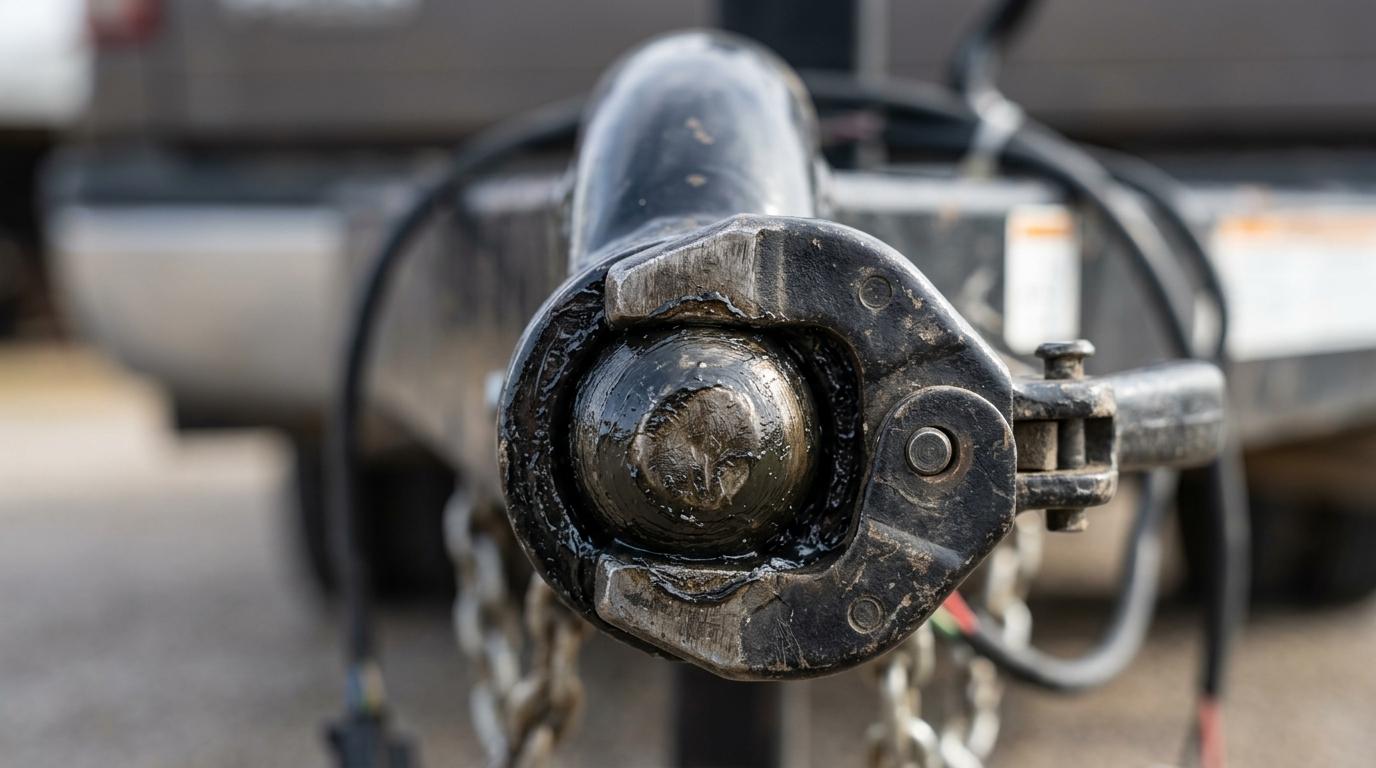
A heavy trailer is only as trustworthy as the connection at the front of the neck. Choosing the right gooseneck coupler style means looking past shape alone and checking how the coupler, ball, latch, chains, jacks, and ratings work together.
TL;DR: Summary
- The best gooseneck coupler styles for heavy trailers are adjustable round-tube, adjustable square-tube, cast-head, pipe-mount weld-on, and offset-style couplers; the right choice depends on trailer neck geometry, loaded weight, ball size, and service conditions.
- A safe gooseneck coupler setup is a full system, not just a coupler body: the ball must match, the clamp latch must fully engage, safety chains must be attached, and the truck, hitch ball, coupler, and trailer ratings must all meet or exceed the actual load.
- Official hookup guidance for gooseneck trailers includes lubricating the ball, centering the coupler over it, lowering the trailer, latching the clamp, attaching safety chains, connecting wiring, checking lights, and fully stowing the jacks.
- If repeated hookups are slowing work, an electric trailer jack converter can upgrade many single-speed and 2-speed manual jack setups, and some dual landing gear systems, while still preserving manual backup operation for power loss.
- Before every trip, inspect coupling system areas including the coupler tube, latch, welds, pin holes, chains, jack mounts, and the trailer’s certification labeling and visible safety components.
The best style for one heavy trailer is not always the best style for another. Equipment trailers, livestock trailers, and flatbeds often need different coupler geometry, adjustment range, and jack clearance, especially if you are also planning an electric trailer jack converter upgrade.
What makes a gooseneck coupler safe for heavy trailers?
A safe gooseneck coupler is a correctly rated ball-and-clamp assembly with working safety chains. Oregon guidance and FMCSA rules point to the same standard: the coupler must lock fully, match the ball, and use safety devices that prevent separation.
The first misconception to clear up is simple: a heavier-looking coupler is not automatically a safer coupler. Safety starts with matching the coupler socket to the correct ball size, confirming the clamp latch closes completely, and making sure the truck-side ball and mounting structure are rated for the trailer’s actual loaded condition, not just its empty weight.
That system view matters because regulations treat coupling as more than a convenience feature. FMCSA requires safety devices that keep a trailer connected if a primary connection fails, and NHTSA expects compliant trailers sold in the United States to meet FMVSS requirements and carry certification labeling. If the coupler fits but the chains, ratings, or mounting structure do not, the setup is still wrong.
How does a gooseneck coupler work with the ball, clamp latch, and safety chains?
A gooseneck coupler works by dropping over a hitch ball and locking with a clamp latch. Oregon’s Commercial Driver Manual outlines the core sequence: lubricate the ball, center the coupler, lower the trailer, latch it, then connect chains and wiring.
Step 1 is alignment. Open the clamp latch, position the coupler directly over the gooseneck ball, and use the trailer jack to lower the neck straight down. A slightly off-center drop can give a false sense of engagement, which is why experienced operators look and listen for full seating instead of assuming it happened.
Step 2 is locking and verification. Once the coupler settles fully onto the ball, close the clamp latch and confirm any secondary pin or keeper is installed. If the latch handle feels forced or stops short, do not tow. That usually points to debris, wrong ball size, poor alignment, or a worn latch pocket.
Step 3 is the rest of the coupling system. Attach safety chains, connect trailer wiring, test lights, and fully lower and stow the trailer jacks before moving. A common miss is leaving the jack foot close to the ground after a rushed hookup, which can destroy the jack on the first driveway breakover.
"Hitches & Couplers, Inc. offers same-business-day shipping before noon CST, which is useful when a coupler or jack issue stops a working trailer."
What are the five best gooseneck coupler styles for heavy trailers?
The five best gooseneck coupler styles are adjustable round-tube, adjustable square-tube, cast-head, pipe-mount weld-on, and offset-style designs. Each solves a different combination of height range, neck construction, serviceability, and front-end clearance.
Before choosing, think about how the trailer actually works. A hay trailer that gets hooked up twice a month has different needs than an equipment trailer that gets loaded daily and adjusted across multiple trucks.
- Adjustable round-tube couplers: Common on heavy utility and equipment trailers; Hitches & Couplers, Inc. often supports this style with related towing and jack hardware because replacement parts and fitment are widely available.
- Adjustable square-tube couplers: Good when indexed height settings and anti-rotation behavior matter more than compact packaging.
- Cast-head gooseneck couplers: Favored for rugged service and high clamp strength where the neck structure is built around a heavier coupler head.
- Pipe-mount weld-on couplers: A strong option for custom neck fabrication, repair work, or trailer builders matching a specific tube layout.
- Offset-style couplers: Useful when trailer neck geometry or bed-clearance needs call for a shifted load path or a different ball position relationship.
Which gooseneck coupler style is best for equipment trailers, livestock trailers, and flatbeds?
Equipment trailers often do best with adjustable couplers, while livestock and flatbed trailers may benefit from either adjustable or cast-head designs. Dexterity at hookup matters, but so do neck height, jack placement, and how often the trailer changes trucks.
If the trailer hauls skid steers, compact excavators, or tractors and sees different truck ride heights, an adjustable round-tube or square-tube coupler usually makes the most sense. Height tuning is faster, and replacement pins and wear parts are easier to source.
If the trailer is a livestock unit with a long service life and frequent field use, a cast-head or stout adjustable design often earns the nod because durability and latch confidence matter in mud, dust, and uneven loading environments.
If the trailer is a hotshot-style flatbed, look closely at front overhang, bed-rail clearance, and jack clearance. This is where buyers sometimes focus only on coupler rating and miss geometry. If the neck angle or jack mounts crowd the truck bed during tight turns, the “best” coupler on paper can still be the wrong part in practice.
How do you match coupler rating, ball size, and trailer weight correctly?
You match a coupler by starting with actual loaded weight and then confirming every mating component. Maryland equipment rules show the principle clearly: ball size and minimum breaking strength must match the coupling class and intended load.
Step 1 is to verify the trailer’s GVWR or MGTW and compare it to real operating conditions. If the trailer routinely carries a compact track loader, attachments, fuel, and chains, use that loaded scenario when checking capacity, not the trailer’s brochure dry weight.
Step 2 is to match ball size exactly. Light trailers may use smaller balls, and Maryland’s table lists a 1-7/8 inch ball for Class 1 trailers up to 2,000 pounds MGTW, with 6,000-pound longitudinal tension and compression strength. Heavy gooseneck trailers usually use larger ball sizes, but the lesson is universal: the ball and coupler socket must match exactly.
Step 3 is to confirm the lowest-rated part in the chain. If the coupler is rated above the ball, or the ball above the truck-side mounting system, the lower number controls. Many hookup failures start with the wrong assumption that a high-rated coupler “upgrades” the rest of the system. It does not.
What should you inspect before every heavy-trailer hookup?
A pre-trip coupler inspection should be short, repeatable, and unforgiving. FMCSA, NHTSA, and CDL procedure guidance all support checking the coupling system areas before the trailer rolls.
A good field routine takes less time than fixing a dropped trailer neck. Start with the parts that separate, wear, crack, or get forgotten in poor light.
- Ball and socket fit: Confirm the correct ball size, clean contact surfaces, and adequate lubrication.
- Clamp latch: Check full movement, positive engagement, and any keeper pin or secondary retainer.
- Coupler structure: Look for elongated pin holes, cracked welds, bent tubes, and fresh rust lines that can signal movement.
- Safety chains and wiring: Verify attachment points, crossing if required by local practice, and working lights.
- Jacks and mounts: Make sure the landing gear or jack is fully stowed, pinned, and not loose at the bracket.
The quiet warning signs matter most. A latch that “usually needs a kick” or a coupler tube with new paint cracking around a weld is already telling you something.
"As an authorized PopUp Towing Products and Magnum Lift dealer, Hitches & Couplers, Inc. focuses on current-model towing and electric jack conversion products."
How is a gooseneck coupler different from a fifth-wheel kingpin setup?
A gooseneck coupler locks onto a hitch ball, while a fifth-wheel trailer uses a kingpin and locking jaws. Oregon coupling guidance covers both, and SAE J2638 is a reference point for heavy-duty kingpin applications.
The practical difference is connection architecture. A gooseneck uses a ball-and-clamp-latch connection under the trailer neck. A fifth-wheel uses a kingpin captured by locking jaws in a plate-style hitch. That changes bed usage, articulation feel, maintenance points, and the way operators inspect the coupling.
For many pickup-based heavy trailers, gooseneck systems remain popular because they leave the bed relatively open when the ball is removed or folded away, depending on hitch design. Fifth-wheel systems are common where the trailer is built around kingpin geometry and the towing pattern fits that format better.
A common misconception is that fifth-wheel automatically means more capacity or more safety. In real use, safety comes from correct design, rating, maintenance, and inspection. A poorly matched fifth-wheel is not safer than a properly matched gooseneck, and the reverse is also true.
When should you convert a manual jack to an electric trailer jack converter?
An electric trailer jack converter makes sense when a manual jack is slowing daily work or causing operator strain. PopUp-style conversion kits are especially relevant on single-speed and 2-speed gooseneck jacks that are otherwise structurally sound.
The best time to convert is when the coupler and neck are already working well, but the lifting process is wasting time. If the trailer is hooked up several times a week, loaded unevenly on jobsites, or used in cold weather, electric lift can remove a lot of repetitive cranking without changing the trailer’s basic coupler setup.
This upgrade also pairs well with owners who tow solo. When one person has to line up the ball, watch neck height, manage wiring, and secure chains, faster jack motion reduces the chance of rushed coupling mistakes.
A pro tip here is not to use an electric trailer jack converter as a bandage for a damaged manual jack. If the jack is bent, internally worn, or loose at the mount, fix the mechanical problem first. The converter should automate a healthy system, not force a failing one.
"Hitches & Couplers, Inc. ships across the lower 48 states with free shipping there, and also ships towing products to Canada."
How do electric trailer jack converter kits help with dual landing gear and manual backup operation?
The right electric trailer jack converter can simplify dual landing gear use without removing manual backup. That matters on heavy gooseneck trailers where power assist is welcome but field recovery still has to be possible if 12V power drops out.
Step 1 is fitment. Confirm whether the trailer uses a single-speed or 2-speed manual jack, then check shaft connection style, bracket clearance, and mount location. Some kits are designed around very specific input shafts and gearhead layouts, so “close enough” fitment is a risky assumption.
Step 2 is system layout. On dual landing gear, the converter needs to work with the cross-shaft arrangement and preserve synchronized motion. If one side leads or drags because of worn linkage, the issue is in the landing gear system, not the motor kit.
Step 3 is backup planning. Manual override is not a luxury on a working trailer. If the battery is weak, a fuse blows, or the motor circuit is damaged, you still need a way to raise or lower the trailer to complete the hookup safely.
Many owners also prefer kits made in the USA when parts support and repeatable fit matter over a long service life.
What mistakes cause failed hookups or premature gooseneck coupler wear?
Most gooseneck coupling problems come from mismatch, poor inspection, or rushed operation. Oregon procedure guidance and common trailer-service practice point to the same failure pattern: wrong ball, incomplete latch closure, bad chain setup, or neglected jacks.
One common mistake is assuming the coupler latched because the trailer dropped onto the ball. Unless the clamp latch closes fully and any keeper is secured, the connection is not done. Another is towing dry. A lightly lubricated ball reduces wear and helps the coupler seat correctly.
A second group of mistakes involves loading and geometry. If the trailer is nose-high or nose-low because the coupler height is wrong, braking and tire wear can suffer, and the jack may be working harder than it should. If you install an electric trailer jack converter, that faster motion makes height correction easier, but it does not remove the need to set the trailer level.
The last mistake is ignoring the full compliance picture. Ratings, safety devices, visible damage, lighting, tires, wheels, and trailer certification labels all matter. A strong coupler on a neglected trailer is still a neglected trailer.
Keywords:
gooseneck coupler